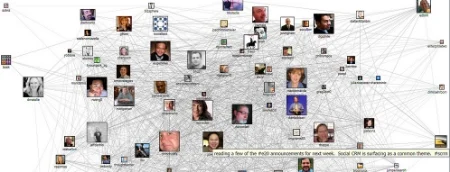
Reach out to the local product community for growth
After a year's worth of lessons learned from all the good and bad product decisions I made as my company's Head of Products, I recognized that I would need even more help from the larger community of Product people in the months and years ahead.
The Product Decision: Advance my own professional product capabilities and better address the expanding needs of my company by tapping into the rich pool of talent and experience all around me.
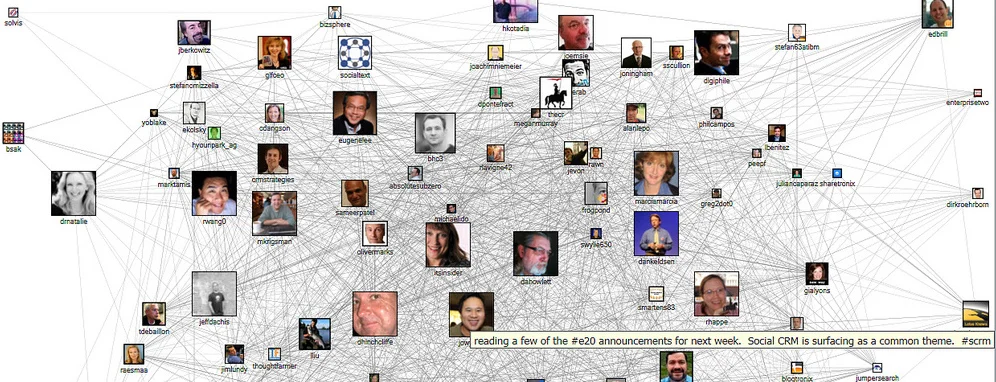
Flickr image source: http://tinyurl.com/zlzgqld
After a year's worth of lessons learned from all the good and bad product decisions I made as my company's Head of Products, I recognized that I would need even more help from the larger community of Product people in the months and years ahead.
As I learn more about what it takes to be a skillful Product Manager, I am continuously humbled by how much more there is to know. I try to expand my understanding by consuming product-related books, articles, podcasts and the like, but I have really come to appreciate in-person exchanges with peers of all experience levels.
And I am fortunate enough to live and work in a large enough metropolitan area to supply many hundreds of these peers. I had only begun to explore the human resources available in this city since moving back several years ago and I am now intent on fully tapping into this fertile (and accessible!) product population.
What drove this decision
I believe that if you actively look, you can always find opportunities for growth, both in your own personal career and with the teams with whom you work in your organization. I was actively seeking both.
I found myself craving fresh ideas and new resources. I wanted expert guidance from outside the company to grow my own skill set as Head of Product - and I would be growing my own Product Team at the same time. It was clear to me that, to improve my prospects, I should better connect with the product community.
The decision: Advance my own professional product capabilities and better address the expanding needs of my company by tapping into the rich pool of talent and experience all around me.
In my own observations over this past year, I began to realize just how large the local Product community was and how fast it seemed to be growing:
- Most of the 30+ new PMs I met seemed to have their own circle of peers with little respective overlap among them.
- My own inbox had accumulated a plethora of local, product-related new stories that would make it seem like this city was a breeding ground for "successful" product startups.
- And one of the local meet ups in which I regularly participate reported to have over 1,1,00 members (although no more than 60 or so ever showed up at a given event.)
I was determined to infiltrate this sizable community using a number of different tactics to track down the right resources to help me with my own product plans.
Plan of attack
I had already put in a lot of effort over the past year, trying to extend my network of Product Managers, both locally and long-distance. But most of those encounters had been introductory and brief. In this new campaign, I had much more specific intentions and would need to precise.
Proactively expand my personal network of product people
One of the activities I enjoy is sitting down, in person, with Product folks I've never met before. And whenever I come in contact with any smart person, I try to make a point of asking them if they know and would introduce me to good Product people.
This past week, I got introduced to a senior PM who is working right up the street from my office. We met for a quick chat over coffee and immediately hit it off, finding common ground with familiar product stories from our respective day jobs. It turns out we were both connected to some of the same people in the community, but he also acknowledged the need to proactively reach out more to our peers. Despite the overlap in our mutual professional networks, the proximity of our offices, AND the fact that I had recently attended an event in his company's space, we would likely never had otherwise met!
This meeting confirmed for me that, if I wanted a potent peer group to draw upon, I would need to drive the outreach myself and continuously build my network the old fashioned way.
Start recruiting for a new PM to join the team
For too many months now, I had been struggling to balance my strategic product work as an executive in the company with the day to day story-level work as a Scrum Product Owner for one of our Engineering teams. I needed to offload the latter so I could better concentrate on the former. In short, I needed to hire a new team member to free me up.
So, with this in mind, I went back out to the community to talk to current job hunters. In the span of a single week, I tracked down four Product Managers who were all looking for their next gig. Two were pursuing senior roles and two were focused more on entry-level positions.

Flickr image source: http://tinyurl.com/oa3l5w6
I inquired about the state of the job market and their own personal challenges with finding good opportunities. I tried to get a better understanding of what I would be competing with compared to how other companies were hiring. I wanted to understand whether or not the recruiters were effective. I was also curious about the different interviewing techniques they had encountered.
As a result of these discussions, I was a little less optimistic about my chances of hiring my new PM. These were talented product people and for different reasons, they had all been struggling more than I would have expected. In the end, I would have to adjust my own expectations and prepare for a longer recruiting campaign.
Create my own discussion group for practicing PMs
Product-focused community events seemed to be proliferating. I had attended recently a new Product meet up nearby that was just getting off the ground. I tracked down and spoke with the group's organizers to get a better sense of what they were trying to offer to the local community. This week, I ran into another, would be event organizer who had similar plans for launching his own product-specific get-together. Ultimately, these event organizers here in town are increasing the number of opportunities for Product people to engage with their peers. I certainly appreciate those efforts but still felt like there was a gap around engaging in more personal interactions on a regular basis.
these event organizers here in town are increasing the number of opportunities for Product people to engage with their peers.
I will certainly continue to attend and support these product events, but I had been thinking about creating a very different forum. So, in this past week, after several months of planning and preparation, I successfully piloted a new, unique gathering with a small subset of local Product Managers of all experience levels where peers could comfortably share their product-specific stories.
For this initial meeting, I hand-selected a small number of PMs who I had met in my travels over the past year but who, for the most part, did not already know each other. But what they have in common are a sense of modesty (no giant egos), a passion for product development, and intrinsic curiosity - and I found that that set of traits ultimately made the group-based conversation easy, inclusive, and informative. At the end of the night, I walked away satisfied with the outcome of the pilot meeting and now am encouraged to extend the experiment next month with an even larger group of like-minded participants.
The impact
After a year of writing about my Product experiences, I am still surprised by the sheer breadth of this role and that awareness continues to be reinforced as I speak with more Product Managers. This past week, I chose to engage with the larger community of Product people outside my company and outside my existing professional network. As I look to broaden my circle of peers, I am taking advantage of opportunities to grow my own skills and to grow my company's Product team.
Look for more reports from theProductPath around product teams, recruiting, and PM networking here on PM Decisions.
More articles from our blog PM Decisions



Call in reinforcements to advance product initiatives
In recognizing that my internal team members did not have the time and/or expertise to help with a few of our upcoming and impactful product initiatives, I decided to reach outside the company and use trusted resources to temporarily expand my team.
The Product Decision: Recruit available experts from the company's extended circle of trusted colleagues to help tackle a few pressing product engagements.

Flickr image source: http://tinyurl.com/o7u8mc2
In recognizing that my internal team members did not have the time and/or expertise to help with a few of our upcoming and impactful product initiatives, I decided to reach outside the company and use trusted resources to temporarily expand my team.
My team has been working at full capacity and is focused on the exact right priorities to continue delivering strong product releases to our customers. There is always more work to do though and sometimes business priorities stretch beyond the team's existing capacity.
There are also budget constraints that are preventing me from expanding my team in a way that would help me address the projects that have bubbled to the top of the company's wish list.
What drove this decision
Good problem solvers can find creative ways to get around roadblocks. I was grappling with a backlog that was starting to look increasingly daunting and could not rely on the familiar and dependable resources that were tied up with other important work.
So I took some time to review the most pressing items and determined that there were opportunities to make short-term progress that would relieve a bit of the pressure. We could find the resources just outside the company's borders and engage the expertise we needed to catch up.
The decision: Recruit available experts from the company's extended circle of trusted colleagues to help tackle a few pressing product engagements.

Flickr image source: http://tinyurl.com/p3nuhy6
We all know smart, dependable people and we try to hire them to permanently join our teams when we have the chance. But these are highly sought-after resources and it's not feasible to hire all of them - how many organizations need 5 senior-level specialists in given functional area? And besides, many of them have already been scooped up by other lucky companies and are happily employed in good positions.
But sometimes, you can catch these folks between gigs and if the stars are aligned, you will have the opportunity to pull them into your group, even if it's only for a brief period of time. I was fortunate enough to have several of those opportunities at the same time and decided to act so I could move forward with my product plans.
Plan of attack
I had been mentally cataloging important projects that were product-related but would not be easy to fold into the main product work stream. Most fell somewhere between must have and nice to have. So to improve my chances of being able to outsource these initiatives to interim resources, I adjusted the scope for each by decomposing larger efforts into smaller increments with shorter iterations to better accommodate less predictable schedules.
As I continued to network with smart product people outside my company I had been on the lookout for available resources with the specific projects in mind. This week, I was able to pull in some strong people to tackle a few of my projects. Coincidentally, each had recently switched into job hunting mode and were delighted to have some part-time assignments to fill the gaps between recruiting activities.
I seized the moment(s) and put them to work immediately to start these three projects:
Build a plan to move from proof-of-concept to prototype
There is a new product proposal that has been gnawing at me for the better part of a year now. I've written about it before (see here) as it continued to gain steam (see here) despite my attempts to slow it down (see here).
This is not the time to argue the merits of this particular proposal but in the spirit of compromise, I have agreed to take the next step in building a true working prototype from the previous proof-of-concept. I was prompted more by the additional learning we could achieve around the technical feasibility than I was in gathering important user insights from an interactive, UX prototype (that would most certainly come later).
I found a talented and credible Product Manager to lead this technical prototype project and paired him up with an expert from one of our technology partners as well as with one of our own Engineers. Collectively, we reviewed the project's scope and made only a few small tweaks to build a 30-day plan that was mostly likely to deliver the outcome.
Revamp product documentation
I don't think I'm stretching the truth when I say that the Product and Tech teams have collectively stepped up our game this year. In addition to reducing the duration of our release cycle to deliver more updates more frequently, we have also focused on pushing out more high priority feature enhancements that are based on direct customer feedback.
What we haven't done well is keep up with all the supplemental collateral that typically accompanies product releases.
What we haven't done well is keep up with all the supplemental collateral that typically accompanies product releases, most notably our official product documentation. There are, I'm ashamed to admit, deficiencies in our collection of knowledge articles with out of date material, flimsy coverage of major components, and complete documentation gaps around key new features.
So I asked a really smart person to help us out. She came in, took one look at our Knowledge Center and decided she would do more than just fill in some obvious gaps. I had asked for help in getting the team caught up - what I got was a proposal and estimate for overhauling the whole depot. Her plan was so impressive that it took me no time to get the entire project approved.
Analytics roadmap
Several weeks back, I had pulled in one of these same folks to help me think through an analytics-related offering. The response to that deliverable had been overwhelmingly positive, both internally and with customers. Based on that success, I reached out to her again and asked for assistance in mapping out a high-level plan to get us to the point where we could actually produce those results in a production environment for customers.
She was the domain expert and needed little support from me other than to know how best to position the final recommendation and how to apply the appropriate polish to effectively sell it to my stakeholders.
The impact
Eventually, I'd like to expand the Product team to be able to tackle even more of the "product backlog" but these short-term engagements have allowed me to make some good progress in the meantime. Outsourcing work can be a great tactic when time or skills are in short supply. My own experiences have been positive, but a great deal of that success is directly tied to finding and securing great resources, inside or outside the company.
Look for more reports from theProductPath around product teams, backlog grooming, and capacity planning here on PM Decisions.
More articles from our blog PM Decisions

Guide and advise fellow Product Managers
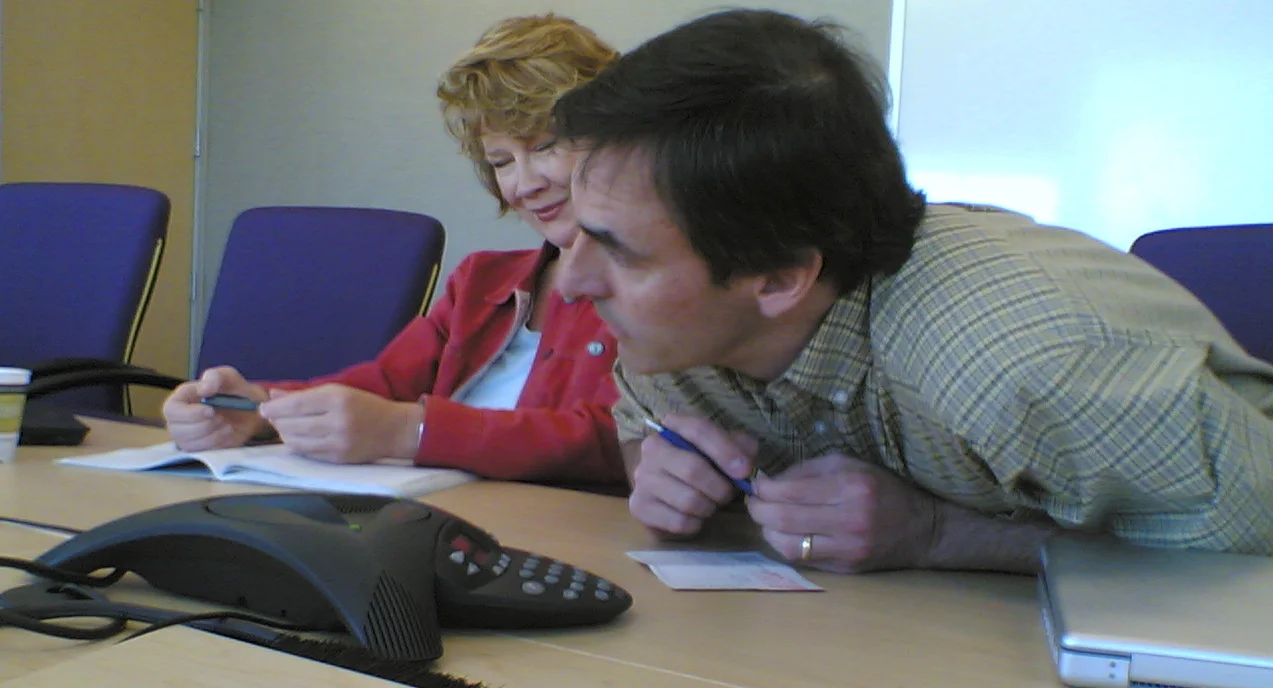
After many rounds of discouraging conversations with less experienced and struggling Product Managers both inside and outside my own company, I decided to assemble and share some helpful resources for advancing one's own PM career.
The Product Decision: Create simple orientation assignments for Product Managers who have a genuine appetite for advancing their careers.
Flickr image source: http://tinyurl.com/plxquqy
After many rounds of discouraging conversations with less experienced and struggling Product Managers both inside and outside my own company, I decided to assemble and share some helpful resources for advancing one's own PM career.
I believe that we are still in the early development stages of the Software Product Manager (SPM) role and also, that there is a general lack of clarity around this particular breed of Product Manager. That would certainly explain the flood of books, articles and similar resources all aimed at helping PMs understand and navigate this career path. But along with those are an even greater number of online conversations that seem to add to the confusion by attempting to explain it.
Here are a few of the top links returned when searching for "What is a Product Manager":
- What, exactly, is a Product Manager?
- Product Manager 101: What Does A Product Manager Actually Do?
- A Product Manager's Job
- Product Managers: Who are these 'mini-CEOs' and what do they do?
For someone who has recently landed their very first Product gig or is just looking to transition into becoming a Product Manager, this visible and honest industry conversation is simply an indicator of how confusing it can be to get started. And while there are some terrific resources being developed, most new PMs don't even know where to begin.
What drove this decision
Closer to home, I knew of three individuals at different stages in their own PM careers who were each struggling with the similar problem.
Arthur was already pursuing a UX calling and was a semester away from earning an advanced degree in that area but had spent enough time around Product people to become intrigued with the role and was now curious about whether he could do both.
Brandon had been tapped by his current company 2 years ago to take on a Product Management role after proving himself as a reliable project manager and was now convinced that he wanted to find his next Product opportunity to continue down this path.
Carl had been a Product Manager for several years but had received no formal training and while he had mastered the more tactical activities of getting customer requirements through Engineering to deliver features to customers, he didn't know where to start to improve beyond that.
I found myself in impromptu mentoring conversations with all three in the span of a single week. I took that as a good sign to revisit my own collection of PM material and pull together suitable resources for at least these three practitioners.
The decision: Create simple orientation assignments for Product Managers who have a genuine appetite for advancing their careers.
The challenge was not finding relevant material but rather curating the collection to zero in on the items that would have the biggest impact. I was looking for artifacts that would be easy to consume, that would provide good direction in the short term, and that might inspire them to explore topics even further on their own.
Plan of attack
These three colleagues were in different stages of their careers but I knew that all of them would benefit from some strong, foundational material. There is a growing body of informational resources for the SPM but I didn't have a place to point them to get started.
Required Reading (AND LISTENING)
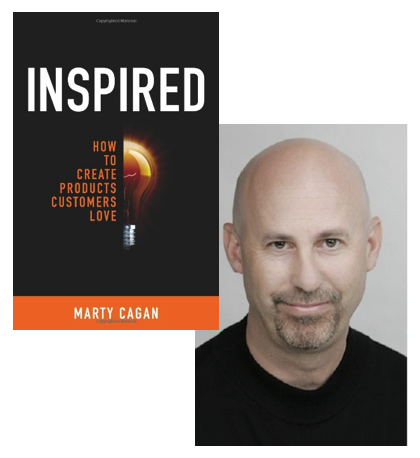
Inspired: How to Create Products Customers Love by Marty Cagan
The first question I always ask Product Managers who are just getting started is whether they've found and read Marty Cagan's book, Inspired - How to Create Products Customer Love. I have received nothing but rave reviews from every person to whom I've recommended this book.
I consider it required reading -- and re-reading. It is easy to consume and is filled with great advice for PMs at all stages. But perhaps the greatest benefit for an early-stage Product Manager is that Cagan clearly outlines the role itself and distinguishes it from the related but often overlapping functions of Project Manager, Product Marketer and UX Designer.
And If you need a break from reading, I can't recommend enough the amazing podcast, This is Product Management, created and hosted by Mike Fishbein. Each episode provides a fresh and unique perspective on this incredible role. Mike recruits inspiring guests who generously share their experiences working in and around the Product function.
Your New PM Job
Gopal Shenoy provides a Getting Started guide for PMs
I then turned our attention to what Product Managers should be thinking about in their early days on the job. Some years back, I came across this wonderful article written by Gopal Shenoy called Software product manager’s first 30 days at a new job …. In it, he lays out a great guide for what good PMs do (or should be doing) in their first few weeks. The list is extensive and a little intimidating - perfect for setting a new PM's expectations.
I encouraged Arthur and Brandon to digest Shenoy's 30-day list and create a distilled version for their own use. And if they made it through that, I further suggested that they read his companion article on what to do in the next 45-90 days.
Brandon is actively interviewing but had not yet found some of the great resources that the PM community has contributed for job hunters. I encouraged him to take a look at one particularly interesting app at http://www.thepminterview.com. The author leverages material from Cracking the PM Interview and Decode and Conquer to create an online, interactive exercise where you can practice your answers to sample interview questions.
Formal Training Programs and Peer Groups
I pointed Carl, who was already embedded on a Product team, to look into cursory workshops and/or full, multi-week courses created specifically for Product Managers. There has been an increase in the number of online or self-guided options from companies like Udemy, but I encouraged Carl to look at local options such as General Assembly's 10-week course or the Pragmatic Marketing program. I explained to him that he would enjoy the added benefit of meeting and networking with peers in his own community.
And speaking of networking, I am a big fan of getting plugged into monthly meet-ups and similar informal, after-work forums related to your career choice. Every month, more and more opportunities spring up for Product Managers to meet and share ideas. I told Arthur, Brandon, and Carl to sign up for an upcoming event in our city and even offered to accompany them.
On the Job Training
Fall in love with a product framework
I prefer to give tactical advice when I can. So I followed up on my previous recommendations (read this book, take this class, join this meet-up, etc.) with a single proposal that I would expect each of them to incorporate differently on their own product paths: fall in love with a product framework.
Over the years, the greater Product community has created and shared many formal templates, authoritative checklists, proven models and reusable processes. A few of these attempt to address the entire product lifecycle but I believe that would be exhausting for an up-and-coming PM to consume, much less apply in practice. Instead, I advocate that new Product Managers zero in on a more discrete area, by starting with what interests them the most.
I used this approach when I was first getting my bearings. I was overwhelmed by all the material and product experts I encountered and was struggling to find any method that I could confidently apply. I eventually discovered Marty Cagan's Opportunity Assessment and used this as a foundation for my building my own method.
And I wouldn't discount the searching process itself. You will inevitably stumble onto new ideas just by sifting through the still disperse product knowledge base to find frameworks that interest you.
Volunteer to do a PM's Job
And what do you do with this new framework you've recently embraced?
I was once told that the best way to get into Product Management is to start doing it. This guru urged would-be PMs to hunt down the closest Product team (or whomever is performing that function) and offer to assist. As someone running a Product team, I genuinely like that approach. But I would argue that showing up empty handed is not as attractive as arriving with expertise around some useful tool that the Product team can use to improve discovery, planning, or execution.
The impact
Ultimately, it is up to Arthur, Brandon, and Carl to move forward at their own pace. I'd like to think my advice is helping them to navigate but I feel like we're still far away from having any kind of proven curriculum. Despite that, I'm seeing more and more people gravitate to this kind of role - and I'm encouraging it. The Product community is fortunate to have professionals from so many disciplines join our ranks, making us a much stronger collective.
Look for more reports from theProductPath around Product teams, PM credibility, and the PM role here on PM Decisions.
More articles from our blog PM Decisions



Network with other Product Managers
Prompted by my search to find a new PM team member, I decided to reconnect with my local peers to converse on products, recruiting and more.
The Product Decision: Use my pressing PM search as a motive for networking with other Product Managers.

Image source: http://www.freeimages.com/photo/509114
Prompted by my search to find a new PM team member, I decided to reconnect with my local peers to converse on products, recruiting and more.
I had been so heads down for the past few months, getting up to speed as the new Product Head Honcho, that I had put any and all contact with external Product Managers way down on the priority list. Where would I fit that into the schedule? It had been challenging enough for me to carve out extra time to meet with our existing customers - and I knew I certainly couldn't defer that activity.
The invites to catch up over lunch and coffee had begun to pile up as I made excuse after excuse for why it was never a convenient time for me. But the truth is, I had been increasingly isolating myself from my peers. And these were colleagues who could help me validate some of my recent Product Decisions and provide significant insight into many of my current challenges.
What drove this decision
In a previous Product Decision, I had chosen to replace one the PMs on my team, which immediately shifted me into recruiting mode (typically an exhausting exercise). In an effort to minimize recruiting fees, I began my search by reaching out to my own network of Product Managers. This provided me with a great opportunity to reconnect with old friends, and through them, new contacts.
The decision: Use my pressing PM search as a motive for networking with other Product Managers

Image source: http://www.freeimages.com/photo/644967
I have found that most people like to feel helpful and are often flattered when asked for their opinions or for assistance with a particular problem. And, if talking shop over coffee isn't incentive enough, many professionals will gladly take time out of their schedule to help out a colleague, especially if the appeal is specific and reasonable.
In this particular case, I was hoping to identify suitable candidates to join my Product Team. By using my contacts to tap into the larger talent pool, I was confident I could accelerate my recruiting efforts. But I would also use the valuable face time to review a few of my past and future product decisions with these specialists.
Plan of attack
My first rule of professional networking is to make sure the meetings are productive for both parties. I began this post by declaring that I had very little spare time to spend outside my company. With that in mind, I began every meeting request with the assumption that my counterpart would likely be in the same position and would need some assurance that I would not be wasting his or her time.
So, aside from showing simple courtesy like confirming the meeting, arriving on time and choosing locations that would be convenient, I took extra care to make sure I was prepared for each discussion.
Provide a Job Description
The primary goal for these meetings was to cast a wider recruiting net and to identify viable candidates for my open Product Manager position. I tried to make that clear in the invitation in the hopes of prompting some early reflection. But because the PM role can be different in each company, I wanted to further clarify the exact type of applicant I was seeking.
I had chosen to defer posting the PM job description on our web site until we had exhausted other available channels so there was no link I could share with my colleagues. But rather than send along some "pre-requisite reading assignment" ahead of our meeting, I chose instead to bring along and share a hard copy of the job description. The physical document, as a take away from the meeting, was meant to keep my appeal for help top of mind - for at least a few hours afterwards.
Prepare a List of Topics for Gathering Feedback
As I mentioned earlier, Product people like to talk shop as much as the next person and truly, I was no different. Once we had moved past the initial pleasantries and discussed the open PM position at my company, I switched gears to pick their brains on any of a number of subjects that I had recently encountered.
I truly wanted feedback and advice on my own projects so in an attempt to make the discussions more productive, I formalized my thoughts and even created some specific questions on each topic - because as a PM, you should never miss a chance to improve your interviewing skills!
Offer Assistance in Return
Besides paying for the coffee or meal, which always goes over well, I also made sure to save time at the end of the meeting to switch the flow and turn the conversation around. I wanted to give my colleague the opportunity to share with me what was happening on their end. What product-related problems were they wrestling with? How was their team performing? Did they have some big product developments happening in the next few weeks?
And it never hurt to ask whether they were happy in their current job - sometimes you can get lucky and find a candidate in your immediate network.
“Let’s talk about you? Are you happy in your current job? Are they treating you well?”
Whenever the conversation turned to a problem or opportunity that I genuinely felt I could help with, I offered my assistance. And I made sure I followed up with any action items in my thank-you email.
The impact
I am pleased to report that through this PM networking activity, I did indeed identify several viable candidates and that accelerated our hiring efforts. But more than that, I was able to reconnect with and renew important relationships with many of my peers. I collected valuable, relevant insight from these professionals that helped me validate or in some cases, adjust some of the product decisions I was making. I was able to expand my own network a bit, a typical but always welcome side effect. And then of course, there was all the great coffee!
Look for more reports from theProductPath around the recruiting for the PM role and professional networking here on PM Decisions.
More articles from our blog PM Decisions


To do my part in helping promote the company with external stakeholders, I decided to tune up my product presentation to deliver a compelling blueprint for the future.
The Product Decision: Prepare and pitch a more strategic product roadmap that could accommodate a broader range of business conversations.