Convey the Product Vision to outside influencers
To do my part in helping promote the company with external stakeholders, I decided to tune up my product presentation to deliver a compelling blueprint for the future.
The Product Decision: Prepare and pitch a more strategic product roadmap that could accommodate a broader range of business conversations.

To do my part in helping promote the company with external stakeholders, I decided to tune up my product presentation to deliver a compelling blueprint for the future.
An early stage company often needs to do more than simply sell and support its products. For instance, there are occasions where larger and longer term plans must be discussed to advance the business through the help of customers, partners, and investors.
As the Head of Products, I often participate in these discussions, usually to tell our unique story from a product perspective. My contribution is relating all the progress made over the past weeks and months to the broader and still unfolding product narrative that will continue to propel us forward in the years ahead.
What drove this decision
With all the hyperbole about taking it to the next level, I rarely see anyone writing about what you do when you get there. There is, of course, the want to celebrate the achievement but that is short-lived and you usually don't rest there for very long. The same energy and passion and drive that got you and the team to this point is what will ultimately compel you to keep moving forward.
My company had reached another stage in its growth and it was time to turn our sights to the next plateau. New players were now starting to take an interest in the company and it would take additional time and energy investments on our part to engage with them.
It should be no surprise then, that in this situation, I would turn to the same tools and tactics I had used to help get our company this far. It was clear to me that, going forward, I would be telling and selling an even larger product vision.
The decision: Prepare and pitch a more strategic product roadmap that could accommodate a broader range of business conversations.
The product roadmap continues to be my go-to asset for constructing full and lively reports, especially with those unfamiliar with our business. I continuously tweak our roadmap, not just to reflect the evolving initiatives and priorities but also to help me tell better stories.
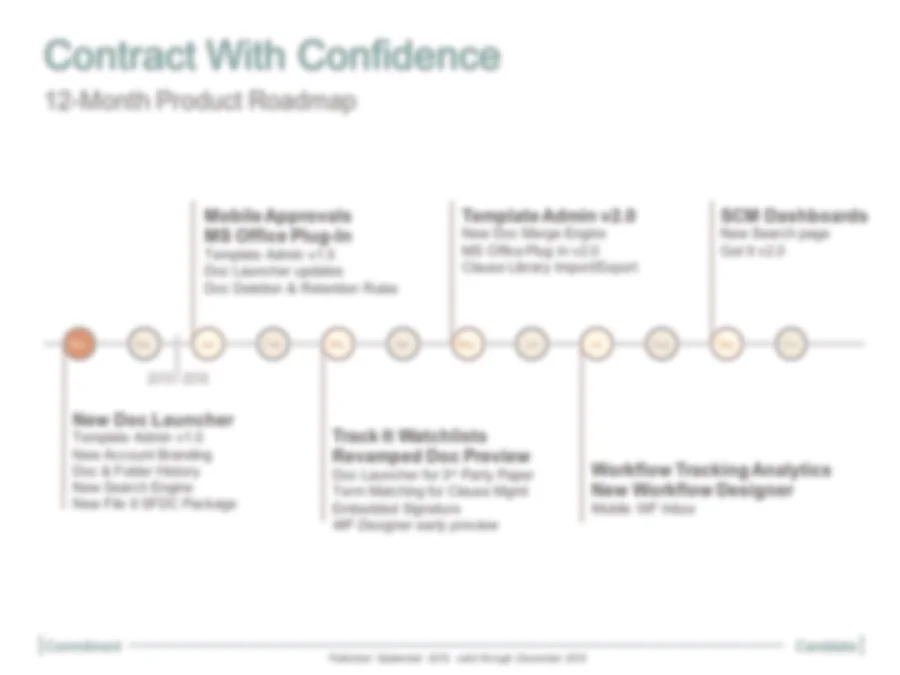
Every so often, I am able to produce a rendition of the roadmap that has just the right amount of fidelity. When that happens, I can communicate equally well with everyone from Engineers to Board members. This was one of those occasions where details about individual features or shorter-term enhancements would be folded into larger themes that stretch out for many months and clearly connect parallel product initiatives.
Plan of attack
Over the past year, I had been more tactical with my product plans, mostly with the intent of rebuilding credibility with the other departments in the organization. Now, I was focused on communicating our product direction to audiences outside the company.
Highlight product advancements to strategic partner
My first opportunity came in an early stage discussion with a new partner. This group was more familiar with the general domain, our specific problem space as well as our closest competitors. So there was no need for me to start all the way back at square one. They would understand how the pieces of our platform fit together, where our ongoing innovation was helping us take a leading position in the market, and how we were preparing to address weak spots in the product.
In covering the roadmap, I stepped through a number of the major past and future milestones to highlight where this partner could "plug in" and expand the value for our joint customers. This tailored view of our company's go-forward product plans ultimately helped them construct a companion roadmap for a strong joint offering.
I found this conversation to be very productive as little time was wasted covering small details. Instead, we were able to focus on a series of touchpoints around which a mutual partnership could be developed.
Communicate rate of progress to potential investors
anytime I find myself in front of investors, I try to emphasize the current product returns realized from past investments.
My next challenge was to use the same roadmap material to build a story that communicated how recent product advancements had directly contributed to the best year in the company's financial history.
The first part of that story was tying important customer victories to key product milestones in an attempt to prove some level of correlation. Indeed, we had prioritized some of our work over the past year to help advance large deals in the sales pipeline.
More than that perhaps, I wanted to communicate that we felt we had nailed the product-market fit and that customers were more regularly landing directly in our sweet spot.
And anytime I find myself in front of investors, I try to emphasize the current product returns realized from past investments. This audience, more than any other, responds well to proof around ROI.
Demonstrate domain expertise and solid product planning to an unacquainted party
The last test was to engage a new group that had no prior contact with our company and no exposure to our particular problem space. For this discussion, I chose to deliver an expedited product overview that highlighted achievements from the past year. My goal was to try to condense the past 12 months and past 5-10 years into a 45-minute presentation - without losing my audience.
Because I didn't know how long I would be able to hold their attention, I decided to focus on how good we had been (and would continue to be) at product planning. I wanted to show how well we understood our customers' problems and why we were confident that we hold our place as a leader in the market.
I was able to underscore this by calling attention to a few parallel development threads in the roadmap that had recently converged to deliver big payoffs for our customers.
The impact
I received positive feedback from participants in all three meetings over this week. Ultimately, I believe the outcomes were largely driven by the preparation time spent on the roadmap material itself. I have been able to get a great deal of mileage from my product roadmap by making sure that it clearly communicates product intentions, that it justifies product investments, and that it ties these investments back to actual customer needs.
Look for more reports from theProductPath around socializing roadmaps, product roadmap themes, and managing stakeholders here on PM Decisions.
More articles from our blog PM Decisions

Showcase roadmap to advance a large deal
To accelerate the largest sales opportunity in our pipeline, I agreed to lead a spirited, product-oriented discussion with the prospect free from any heavy sales pressure.
The Product Decision: Demonstrate an impressive pace of innovation through a series of past accomplishments and future intentions and encourage the customer to weigh in on the ongoing roadmap priorities.

Flickr image source: http://tinyurl.com/pgfwehq
To accelerate the largest sales opportunity in our pipeline, I agreed to lead a spirited, product-oriented discussion with the prospect free from any heavy sales pressure.
It is not uncommon for Sales to pull the Product team into large deals, especially late in the sales cycle where there is a need for even greater assurance that we are a vendor on which they can rely. I have developed and shared sanitized, customer-facing roadmaps on many occasions and have even delivered custom product demos to help our Reps close their transactions.
I do have to be careful about sharing too much information prematurely. Even hinting that the product may be headed down a particular path can send an overeager Account Executive spiraling off in a wrong direction. But I do appreciate the positive impact for a potential customer to "be invited to a private meeting with the head of our Product group." I also think it is valuable to assist in efforts like these and to maintain a healthy relationship with our revenue-producing Sales team.
What drove this decision
I am firmly against letting any one customer hold sway over the roadmap and my product priorities
I was familiar with this particular prospect - indeed we had all been watching the opportunity progress over the past few months. The use case was squarely in our wheelhouse but the prospect had identified a few specific feature requests that we might not otherwise have delivered in a suitable time frame. And while I am firmly against letting any one customer hold sway over the roadmap and my product priorities, I do believe there is room for a large, active user base to weigh in on decisions about product direction.
The decision: Demonstrate an impressive pace of innovation through a series of past accomplishments and future intentions and encourage the customer to weigh in on the ongoing roadmap priorities.

Image source: http://tinyurl.com/qjogg57
Customer seem to love talking about roadmaps. Even when you lay out all the disclaimers about lack of certainty and best guess estimates, there is still enough curiosity remaining to drive a lively conversation.
I don't mind sharing our vision for the products and where I'd like to take them in the months and years ahead. There are certain paths that are quite clear to me at the moment and others that are more directional in nature.
I am also very comfortable weaving a strong product story that incorporates past achievements with current work and that extends into the not-to-distant future.
Plan of attack
As I mentioned, the meeting was not intended to be overly sales-y but the parties on both sides knew this would be another part of our pitch for their business. I built a product-focused agenda that put our offerings in the best possible light. I accentuated the products and features that were high on their list of needs, starting with items for which we had just completed development and moving to the ones that were still several months away.
Demonstrate A working version of an early prototype
Previously in the same sales process, I shared some clickable prototypes with this prospect to give them an idea of where we were headed. One prototype in particular was more relevant to their primary use case and the prospect had showed great interest at the time.
The Product and Engineering teams had since made good progress with the development of this feature so I used this opportunity to walk the prospect through a fully implemented version. The feature was intended to be the highlight of the upcoming product release so the demonstration was positioned as an early and somewhat exclusive sneak peak.
Preview unreleased features
Another keen area of interest for the prospect happened to overlap with one of my high priority product initiatives. I had been pushing our internal teams to complete the first iteration of a major component whose full delivery schedule would stretch out for many more months.
It turned out that while this initial cut was not quite ready for widespread use, it was certainly viable for use in pilot exercises like the one the prospect had scheduled. Again, we emphasized the exclusive access being offered and made sure to highlight our company's rapid pace of development.
Share detailed roadmap of prospect's most requested feature
After completing the feature demonstrations (which were well-received), I switched gears and walked through a customized product roadmap. The prospect had expressed a need for functionality that was not yet part of our product but that would represent a natural extension to the platform.
While I was careful not to make promises about specific dates, I was able to talk through a plausible plan that illustrated the incremental delivery of their requested functionality.
Unveil results of relevant internal research efforts
In a separate internal research & development initiative, I had recruited a data scientist to help us look for useful and insightful ways to share the data we were collecting around our customers' workflows. She had produced some impressive dashboard-style reports and charts that were scoring huge points with our internal stakeholders.
So, as the big finale to the conversation with our prospect, I rolled out these artifacts and tied them back to the workflows they would ultimately use in their own solutions. The resulting discussion was quite fruitful for both parties as we collectively described a future partnership filled with great potential.
The impact
The short version is that it worked! The conversation was very productive and we impressed the prospect enough to have them throw more weight behind the initiative. Nothing specific was promised but they did acknowledge our commitment to advancing the products and their unique opportunity to work with us to guide its long-term development.
Look for more reports from theProductPath around product reviews, socializing product roadmaps, and the PM role here on PM Decisions.
More articles from our blog PM Decisions
Publish and promote a more consumable product roadmap
As interest in the future capabilities of our products began to increase, I decided to invest more time in making the roadmap more accessible to all parties.
The Product Decision: Socialize a lighter weight product roadmap for inside and outside audiences.

Flickr image sources: http://tinyurl.com/otrq3r6, http://tinyurl.com/qyf68uo
As interest in the future capabilities of our products began to increase, I decided to invest more time in making the roadmap more accessible to all parties.
I could spend hours tinkering with a roadmap. There are so many variables to play with, dependencies to work through, customer feedback to fold in, unanticipated hiccups that challenge the schedule, new bugs that surface, and on and on. Without any prompting, I will frequently create several versions of the roadmap to emphasize different details or highlight specific risks. But the list of people that want or NEED to get that close to those details is quite short.
The roadmap can be an indispensable tool for communicating plans to those outside the product team. In my experience though, geeking out with the product roadmap is just not for everyone - most people just want the simple story.
What drove this decision
Over the past few months, I had been fielding a steady stream of inquiries from our Sales team who in turn, were being asked by our customers and prospects to share our product roadmap. These requests were prompted by a desire to see where the company were headed, product wise, especially when there was some set of requirements that would seem to stretch the current limits of our platform.
Most people just want the simple story.
I was also being pulled into discussions with other departments across the organization where, inevitably, the conversations were centered around how our products would (or wouldn't) address a variety of concerns. During these meetings, I often felt as if I should have been carrying a copy of the roadmap with me but the versions I had were too elaborate and were more likely to have generated more questions that it would have answered.
The decision: Socialize a lighter weight product roadmap for inside and outside audiences
Many of the questions I was answering were simple in nature and could be settled with a quick clarification or by referencing a feature in an upcoming release. Unfortunately, there was no accessible model or illustration to reference. I needed to create an alternative, more accessible artifact.
Plan of attack
You have different considerations when you produce a version of your primary artifact that is suitable for external audiences. Not only will you have the challenge of reducing the overall complexity of the content to make it more accessible to those with less context, but you may also need to put it within appropriate physical reach to accommodate the timeliness of their needs.
For me, this meant paring down the content to eliminate details that would only be needed or appreciated by the Product and Engineering teams. It also meant distributing the new artifacts to new channels that puts them within arm's reach and encouraged self-service (vs. disruptive, ad-hoc inquiries).
Create an attractive artifact that's easy to follow
The first step was perhaps the most difficult for me. I started with the assumption that this extended audience would have a very limited attention span. They would not be that interested in exploring all the potential paths, dependencies and implementation details of the 12-month product roadmap. They were looking for quick answers to broad questions.
Image source: https://www.flickr.com/photos/freshwater2006/693945631
In an attempt to remove the "clutter", I focused on highlighting outcomes, specifically the key dates when they could reasonably expect the big ticket items to become available. I retained the high level themes, the broad commitment dates and other key elements that go into creating a solid product roadmap. I also embellished this version a bit, altering the names of certain features to line up better with customer use cases. For example, instead of listing a simple "reminder" feature, I described how the reminders could be used to better support a particular business process lifecycle.
Finally, I included and emphasized disclaimers about the accuracy of the roadmap commitments to help set/adjust expectations. This was a bit more CYA than anything else as I want to be able to defend future product decisions that will inevitably conflict with any previous "promises".
Make it accessible for self-service
Not that I don't appreciate being pulled into product conversations but a great number of these do not require the Product Head Honcho. To help people answer their own questions, I took care to put the light weight Roadmap in easy-to-find places throughout the office and beyond:
- Outside my office - My own office is on a well-trafficked path making it convenient to post a copy of the Roadmap on the wall. Several times, when people have barged into my office, I have had to gently usher them outside to point out the "self-service" display.
- On monitors - Our IT team has placed large, flat-screen monitors throughout the office. I have inserted an image of the new Roadmap into the standard rotation for these monitors to help keep it top of mind.
- Shared repository - I also found it useful to put a copy of the Roadmap artifact in the shared "folder". We have been coaching people to begin any new search there before emailing or picking up the phone.
Present early and often
Now that the distilled Roadmap was ready, I started to share it with the teams at every opportunity. At "all hands" meetings, at our monthly Release Preview, during weekly Sales and Marketing meetings, and at customer events, I would present the artifact to show incremental progress, update everyone on recent product decisions and even show sneak peaks of ongoing development initiatives.
The impact
I am pleased to have stemmed the tide of inbound roadmap-related queries. And while it does take a few extra cycles for me to keep everyone up to date, I am confident that we have further empowered our Sales team and are helping them move past would-be obstacles with customers and prospects in the sales cycles.
The simpler, lighter weight rendition of the Product Roadmap is now a staple of our planning efforts. We will continue to produce and promote the roadmap through this artifact.
Look for more reports from theProductPath around product management tools, product roadmaps, and product culture here on PM Decisions.
More articles from our blog PM Decisions



Repave the road...map
After inheriting a weathered product roadmap whose years of wear and tear had been the source of chronic problems for our company, I decided to fortify its very foundation.
The Product Decision: Repair the roadmap infrastructure.

Image source: https://www.flickr.com/photos/willemvanbergen/4498186500
After inheriting a weathered product roadmap whose years of wear and tear had been the source of chronic problems for our company, I decided to fortify its very foundation.
Like many early stage companies, we had been struggling with product direction, with making and keeping promises to customers, and with overall Engineering churn. The source of many of these problems was a Product Roadmap that frequently over committed and that failed to adhere to any consistent vision.
What drove this decision
It's fair to say that no one expects every promise to come true. And that holds for product roadmaps as well. Roadmaps are simply a plan that drives towards some future state of your product and as Eisenhower famously said, "Plans are nothing, planning is everything".
Some Product Managers get into trouble when they get too specific about future plans and end up prematurely commit to features and dates in their roadmaps. This was a perpetual problem at my company and over the years, our credibility with customers and prospects as well as with internal sales & support teams had deteriorated.
The change in leadership on the Product team presented me with an opportunity to address the problem head on but that would require some real road(map) construction work.
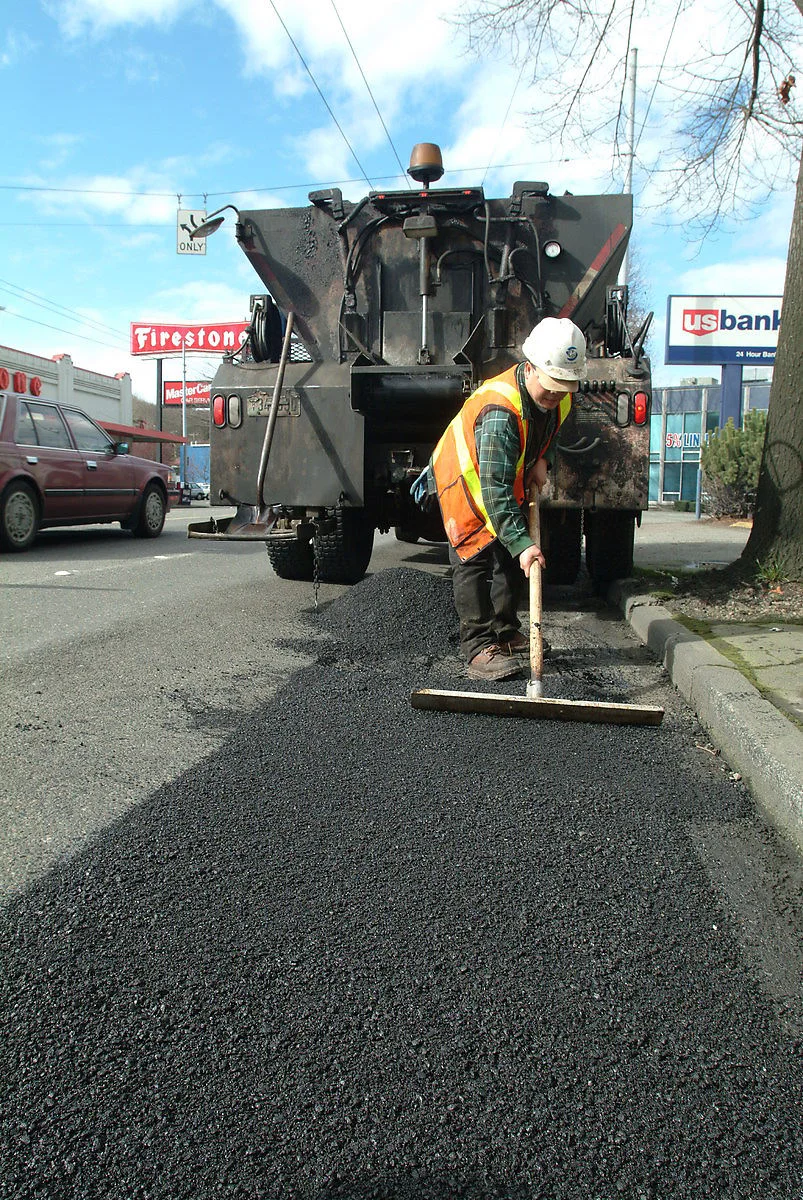
Image source: https://www.flickr.com/photos/seattlemunicipalarchives/3749710569
The decision: Repair the roadmap infrastructure
There are quite a few good sources on the Internet that describe proven techniques for constructing sound product roadmaps and bolstering product planning efforts. Indeed, the tactics described here are not fundamentally revolutionary. What is novel perhaps, is how, with a few straightforward changes to how we built and socialized our product roadmap, we were able to directly address and ultimately improve the Product team's credibility.
Plan of attack
We identified and committed to three changes (at least in this first phase of construction) that would yield the most value for our stakeholders. They are not mutually dependent and could be done in any order.
Use 3/6/12 months increments
We immediately dropped the former convention of spelling out exact release dates in the roadmap. Instead of prematurely committing to specific monthly releases, for example, we create a 3/6/12 month plan. Because our confidence was much higher in the short term feature enhancements, we described these in more detail on the roadmap. And we decreased the level of detail around features as we moved into the six- and 12-month phases.
This change shifted the focus away from specific dates and to the prioritization and staging of the work itself.
“We use high-level themes because it makes communication simpler and allows us to keep uncertain details vague. It also helps to limit scope creep – if a request for a new feature doesn’t align with the agreed themes then it’s easy to push back. The use of themes, combined with broad delivery windows as we move into the future, helps us to be more confident that we can deliver what’s on the roadmap.”
Create themes for prioritizing product decisions
Roadmaps that stretch out for months or years can be complicated and unwieldy for the newcomer. It is difficult to capture all the finer points of a Roadmap in a high-level, visual chart or to communicate all the thinking that went into developing it.
To make our Roadmap easier for others outside the Product team to consume, we introduced and described a few themes. These themes helped to visually connect different units of work so that the causal observer could find order in the abundance of features.
The themes helped our audience to better understand our decision process. For instance, we could show how when a particular feature on the roadmap aligned with multiple themes it was given higher priority over other features.
Separate commitments from candidates
There is another simple technique that roadmappers can employ to avoid making explicit promises, especially when facing increased uncertainty about the ability to deliver features far down the road.
On any/all external facing versions of your roadmap, you include a graph that has two opposite endpoints: Commitments and Candidates. The features about which you feel more confident, likely the ones you will tackle sooner, will appear on the Commitment end of the graph. The features that are further out in the future will inevitably be designated as Candidates on the graph.
While this tactic might seem obvious to you and your Product team, it will help to set the proper expectations with your stakeholders and help you stave off unproductive conversations around future roadmap commitments.
The impact
I published the updated Product Roadmap at the beginning of the year with these three improvements: 3/6/12 month timelines, high-level themes, and a commitment/candidate graph. And, while the changes were relatively simple, the outcome was significant. Product conversations with internal and external audiences were more focused. Our team spent less time explaining or defending our decisions and more time engaging stakeholders in productive dialogue about solving important customer challenges.
Look for more reports from theProductPath around product roadmaps, roadmap planning, and managing stakeholders here on PM Decisions.
More articles from our blog PM Decisions


Campaign for early Product Roadmap support
To increase the chances that the new Product Roadmap (and my first at this company) would win favor throughout the company, I decided to conduct a campaign to build early support for the Roadmap itself.
The Product Decision: Conduct a phased campaign to build early support for your new Product Roadmap before unveiling it to the masses.

Image source: https://www.flickr.com/photos/amycgx/3119640267
To increase the chances that the new Product Roadmap (and my first here) would win favor throughout the company, I decided to conduct a campaign to build early support for the Roadmap itself.
As the new guy now leading the Product team, I had my hands full getting up to speed in the first few weeks. My immediate concern was keeping the current Release on track but the greater challenge was creating a new Product Roadmap for the upcoming year and rapidly drumming up support within the company.
What drove this decision
Taking over a Product team at the beginning of a calendar year has some additional pressures as you might expect. Many internal and external parties are looking for clear indications of the overall product direction, the most concrete of which is the Product Roadmap.
Our company likes to kick off the new year with a rousing, all-hands pep rally for the entire company and one of the meeting's big agenda topics is the presentation of the refreshed Product Roadmap. A big reveal from me that early on would be risky as I hadn't built up sufficient credibility by that point. And with just a few weeks into this PM role, I really hadn’t hadn't been able to speak with as many departments as I had hoped. To pull this off, I needed to build a groundswell of support by having the various department weigh in on, or at least preview the Roadmap before I tried to broadcast it to the masses.

Image source: https://www.flickr.com/photos/israel-mfa/14616944000
The decision: Build support for the new Product Roadmap in stages
My ultimate goal was to present my new Product Roadmap to a room full of supporters. To improve my chances, I started a somewhat calculated crusade to win friends and influence people all around the company.
Plan of attack
There is no one, obvious way to plan a campaign like this but the strategy I recommend is to start small and with people whose opinions you value and push them to poke holes in your product strategy before moving to the next group. I have outlined the approach I took which proved successful.
Start with just the Product team
I began the exercise with my own Product team, perhaps the most empathetic of the groups I would encounter. These folks were the most patient and, because their future paths were most closely linked to the Roadmap, the most eager to engage. With this group's help, I was able to get my initial story straight, confirm the overall themes, and plug some minor gaps in the strategy.
run the roadmap past the Sales Engineers
The next audience I sought, though discretely, was with the Sales Engineers. I had worked closely with this team in the past and knew they would be supportive. I trust their general feedback but it was also important for me to vet out some of the key product decisions with someone who interacted more frequently and directly with our prospects and customers.
pitch to the Key Stakeholders
With my confidence growing, I moved on, skipping over the individual departments to gather all the stakeholders in a room. As you might expect, this group of department heads, their bosses and our senior leadership team is composed of a great number of strong personalities. But when invited to sit alongside their peers, even the feistiest individuals will often tamp down their protests, yielding to and general supporting the views of the larger group. I found this to be the case with my Roadmap presentation and used the inferred approval from the group to launch into the home stretch.
present to Individual Departments
With support from the top, I proceeded to set up separate meetings with each major department including Engineering, Operations, QA, and Customer Support. In each meeting, I tried to highlight those parts of the Roadmap that I thought would appeal most to each group. This proved valuable later, in the larger setting when I was able to direct different topics to specific members of the audience, with the effect of making it seem as though they had already endorsed the individual ideas.
Announce to the Entire company
The final stop in the campaign of dreams was pitching the Roadmap to the entire company. At that point of course, through all my previous efforts, I had eliminated the element of surprise. I had effectively planted sympathetic individuals in the crowd who consciously or not, were giving me the nods of support I needed.
And, while there was no thunderous applause at the end of my presentation, I did get relatively high marks for a "new guy". In fact, a number of people approached me afterwards with positive feedback and great suggestions about how to further socialize the Roadmap internally. For example, we decided to start using the many monitors hung on the walls throughout our office to track our Roadmap progress over the coming weeks & months.
The impact
When I look back, it is obvious to me that this kind of approach to build internal support takes more cycles than one big reveal. Meeting with each team, one at a time and reviewing the Roadmap over and over was certainly more work in the short term but has paid off. I still have to demonstrate that we can achieve what was promised but I should not be spending as many cycles defending the Roadmap itself.
Look for more reports from theProductPath around product roadmaps, promoting product ideas and working with stakeholders here on PM Decisions.
More articles from our blog PM Decisions


In recognizing that we were finally in a position to start gathering real requirements from a prime new customer, I decided to move forward with building a prototype for a new product offering.
The Product Decision: Complete a working prototype that we could use to drive productive conversations with customers around requirements.