
Sync up with Product Marketing
Over the past weeks, I had lost touch with my colleagues in Marketing, so I decided to take advantage of some mutual schedule alignment and catch up with our Product Marketing Manager.
The Product Decision: Regroup with my counterpart in Product Marketing to get our collective and connected plans in order.

Flickr image source: http://tinyurl.com/nwkerlx
Over the past weeks, I had lost touch with my colleagues in Marketing, so I decided to take advantage of some mutual schedule alignment and catch up with our Product Marketing Manager.
“The product marketing team member is responsible for telling the world about the product, managing the external-facing product launch, providing tools for the sales channel to market and sell the product, and for leading key programs such as online marketing campaigns and influencer marketing programs.”
On at least one previous occasion, I have mentioned how delightful it is to have a genuine Product Marketing Manager on the team. There is a distinct role for Product Marketing that sometimes doesn't manifest in product companies until they've reached a certain stage in their growth. Until then, those key activities and responsibilities will be carried out by people in other positions, who probably already have too much to do.
I was one of those people.
Our company had finally reached that growth stage and now had a full-time PMM who was in charge of tackling the myriad tasks associated with taking our products to market.
What drove this decision
As you might expect, our new PMM became busy as well, dashing any aspirations I had of working side by side with her on a regular basis. We both still had many other priorities competing for our respective time.
But there had been some early achievements. Over the past few months, I was able to transition the Release Communication planning that accompanies each formal product release. Neither of us was ready to put those tasks on auto-pilot just yet and expected to do some additional tweaking. Beyond that, we were eager to tackle a whole host of new product-related activities that we would now be capable of performing. This would require more coordination.
The decision: Regroup with my counterpart in Product Marketing to get our collective and connected plans in order.
I will admit that, up until recently, my priorities and focus around go-to-market had always been more short-term in nature:
- How do we pull together and update all the product collateral for the upcoming product release?
- Who is writing the Release Notes, delivering the webinar, training the Sales Engineers?
- What needs to change on the marketing website, in the knowledge articles, in our sales presentations
- How are we communicating changes, if any, in our pricing or bundled offerings?
- Do we have customers that can help us with promotion via testimonials, reviews, or case studies?
All these questions and more are now being fielded by our PMM but I still care very much about the answers and outcomes and, in many cases, am still on the hook for supplying some of the critical details.
Plan of attack
Weeks had passed with very infrequent contact between us so we had more than a few ducks to get in a row. We had to square away some short-term tasks and also finalize a few of our longer-term projects.
Revisit the Release Communication Plan
We had been executing well on the Communication Plan for the last few releases. It was now a familiar exercise but one that still requires coordination. Given that this was our last big push of the year, we were both hoping to finish strong.
Methodically, we walked through our checklist which included, among other things:
- Creating the material, prepping, and rehearsing for the post-release webinar
- Sending the series of teaser emails to customers to register for the webinar
- Conducting brief user surveys before and after the release
- Crafting a press release for one of the prominent new features
- Refreshing the internal sales collateral to better communicate the enhanced product messaging
- Updating the technical sales demos to reflect the product updates
Prep for upcoming talks with Analysts
In a few of our larger sales opportunities, we were painfully reminded of how important it was to have visibility with prominent industry analysts. In response, the company had launched an initiative to get us back on the industry analysts' collective radar and re-introducing them to our latest and greatest from the product side was a big part of that push.
Building on some introductions and (albeit brief) conversations we had had with analysts at a recent trade show, the PMM had set up some individual briefing calls to re-engage with these industry experts. She and I walked through the schedule and the best way to approach each call to maximize credibility with our larger customers and prospects.
Complete last steps of new product launch

Flickr image source: http://tinyurl.com/qb836wj
One of the best things to happen this year for me was launching a brand new product to the market. It was my first since stepping into the new role and I was eager to see it take off.
The PMM and I had been executing a solid product rollout plan for several weeks now and we were nearing the end of the operation. The final steps were to get the new product listed in a prominent app store, and then begin a vigorous campaign with the Sales team to introduce and upsell the app to existing customers.
We confirmed that after testing the response from our core base, we would ramp up the product marketing efforts and make a much stronger push to the greater market.
The impact
It is a satisfying feeling to get caught up when you feel behind. We both came away from our meetings this week more confident about our plans for the rest of the year. In my opinion, regular email-based discussions and ongoing status updates are often adequate but, for the critical matters, I'll take uninterrupted, face-to-face meetings any day of the week.
Look for more reports from theProductPath around product releases, managing stakeholders, and product feedback here on PM Decisions.
More articles from our blog PM Decisions


Triage an almost bungled feature upgrade
In recognizing that our pre-deployment testing had raised unexpected alarms with some customers and our own Support staff, I decided to straighten out the mess by creating a better feature migration path.
The Product Decision: Instead of forcing a more immediate upgrade on our users, I would stretch out the feature deprecation period and give customers more time and more autonomy to make the transition.

Flickr image source: http://tinyurl.com/pp7daju
In recognizing that our pre-deployment testing had raised unexpected alarms with some customers and our own Support staff, I decided to straighten out the mess by creating a better feature migration path.
We were winding down the days to our next major product release and I thought the planning had been going well. There are always a number of moving parts in a big deployment and it takes no small bit of coordination across teams to pull off a trouble-free rollout.
One of the big announcements this time around was how we had overhauled one of our more prominent features to make it easier to use. And while we had usage data that showed it wasn't exactly mission critical for our existing customers, we still wanted to ensure a smooth migration.
What drove this decision
The upgrade approach we had planned was simply swapping in the new feature in the place of the old one. Any account that was actively using the old feature would continue to work for the 30 days following the release but after that time, all accounts would be have been automatically switched over.
This seemed straightforward enough and indeed, our internal testing and QA efforts proved that this was a clean transition. Where we went wrong however, was not effectively communicating the plan, especially to our internal stakeholders.
The most obvious blunder was in the Release Notes (I wrote) that we circulate internally, weeks before the go-live date. I had made a copy/paste error using some outdated text and reported the exact opposite intent around this migration! As you might imagine, the Customer Success team freaked out when the old feature "suddenly just disappeared".
All fingers were rightfully pointing back to me and my Product Team. What I thought had been weeks of good planning and internal discussion were negated by what was now a small crisis. I needed a good plan to set things straight.
The decision: Instead of forcing a more immediate upgrade on our users, I would stretch out the feature deprecation period and give customers more time and more autonomy to make the transition.
It is worth clarifying that nothing was indeed broken in any customer account and nothing would break as a result of pushing the new feature in the upcoming release. Actually, I could have tried to smooth over the current unrest and push forward as we had originally planned. After all, no actual customer had experienced any problems in their accounts.
But in this case I chose a more cautious path. Even though it would be more work for our tech teams - actually, it would be re-work since we had already removed the old feature and now had to quickly retest the reverted code - I knew the extra effort to create an extended upgrade period would cost us a lot less than having to soothe any confused or disgruntled customers.
Plan of attack
Patience is a virtue - especially in times of crisis. When the voices are beginning to elevate, when email threads are growing exponentially in a matter of hours, and when emergency meetings are being scheduled first thing in the morning, it helps to be able to keep a calm head.
I would have to calibrate our response based on the actual size of the problem.
One of the things I wanted to make sure was that, in attempting to address the problem, we didn't make things any worse than they were already perceived to be. The key to that, in my opinion, was to properly scope the effort. In short, I would need to be able to calibrate our response based on the actual size of the problem.
Understand the full impact of the change
When we did assemble the interested parties in a meeting room and reviewed the situation, one of the first questions I asked was whether we knew the number of customers/accounts that would be affected by the deprecated feature. My own Product team had gathered some numbers weeks earlier but I wanted to know if we had been off in our estimates.
Because there wasn't enough certainty, I had the Engineers run a new set of exhaustive queries to get our hands around the total affected population. Early totals were supplemented by more thorough search results but all reports showed that the impact was far less significant than the recent hype would have suggested.
Flickr image source: http://tinyurl.com/ol3x3jr
Call attention to the deprecated feature
With the Engineering team's help, I committed to reinstating the deprecated feature into the product to help affected customers with their inevitable migration. But in doing so, I insisted that we incorporate some blatant visual cues for the end user so they understood that some action was required.
With minimal work, we were able to introduce a glaring design element intended to draw attention to the deprecated feature. This new call to action would be reinforced with other messaging inside the product and externally as well.
Broadcast (better) to internal and external users
The steps required for a customer to move to the new, improved feature were straightforward and would likely only take a few minutes to complete. However, I have learned the hard way about underestimating users and so, to err on the side of caution, I committed to providing multiple migration artifacts.
I had the Product team scramble to develop new collateral including a 1-page cheat sheet and a short instructional video to help guide customers on the migration process. In both, we explained how the deprecated feature would be disappearing in the subsequent release to be replaced by the improved option available now and we included a recommended course of action to avoid any problems in their account.
The impact
In the post-mortem discussion, all the teams agreed that the new feature is a much better option for our end users - we had just stumbled a bit in our plan to roll it out to our customers. It was a good lesson for me and one that I'm happy to have tackled before the official release where it could really have escalated.
Look for more reports from theProductPath around product releases, product culture, and PM credibility here on PM Decisions.
More articles from our blog PM Decisions
Write the Release Notes
After realizing my goto resource would be on vacation during the next big deployment, I decided to step in and take the lead on producing the key product documentation.
The Product Decision: Roll up my sleeves, dust off the technical writing skills and crank out the next iteration of our product release notes.
Flickr image source: http://tinyurl.com/ozc9zcy
After realizing my goto resource would be on vacation during the next big deployment, I decided to step in and take the lead on producing the key product documentation.
Our company publishes Release Notes for every major product upgrade. We create this formal documentation for existing customers mostly, as we look to highlight improvements and bug fixes to our software products and any changes in how we deploy, license, or support those products.
I have regularly contributed to this document but have never owned the task of generating and assembling the Release Notes for our product deployments. With each major product release, I have also looked for opportunities to incrementally improve the structure and details of this important piece of product collateral.
What drove this decision
Flickr image source: http://tinyurl.com/njjshos
One of my Product Managers had scheduled some time off of work for a much-needed (but poorly timed:-) family vacation. Up until this time, the Product Team had leaned on him to lead the effort of producing the Release Notes. And he had always come through.
Each time of course, it had been a team effort as each Product Manager was ultimately responsible for capturing and communicating their team's respective work. But "Vacation Guy" had been the one to pull it all together and ultimately deliver it to the eager masses.
His absence would put us in a tough spot - but it also presented a good opportunity for me to pitch in.
The decision: Roll up my sleeves, dust off the technical writing skills and crank out the next iteration of our product release notes.
I was confident about writing the document itself and fully aware of the entire scope of the upcoming release. But beyond the heads-down task of cranking out the words and pictures, I wanted to use this occasion to advance the state of the product communication we use with our stakeholders.
Our new Product Marketing Manager has been pushing my product team to better connect the dots around product/feature positioning.
On a related note, the company had recently hired our first, full-time Product Marketing Manager (a great move) who among other things, is helping us with the many tasks associated with a product release. For example, she has taken over the Release Communication Plan that is used to orchestrate most of the customer-facing tasks like email notifications, blog posts and related content marketing activities, and promoting the post-release webinars. And much of what she requires for this Plan is derived from the initial draft of our Release Notes.
Among the many improvements she has ushered in has been pushing my product team to better connect the dots around product/feature positioning. For example, the work we do to create testable hypotheses further upstream in the product discovery and early development process were all but lost by the time we delivered the working solution. But that is valuable information that needs to be communicated to customers and end users.
Plan of attack
We generally organizes topics in our Release Notes like this:
TABLE OF CONTENTS
About the Release Notes
Release Overview
End of Life Announcements
Enhancements
- Major enhancement
- Customer facing notes
- Content-marketing fodder
- Internal-only messaging
- Major enhancement
- ...
- Other enhancements
- Fixes
Known Issues
Getting started was not quite as easy as "Save as, Search-and-Replace" but we had developed a reusable structure for the document that made it easier to produce each new iteration.
Internal first, then external version
I began by creating an internal-only version that contains more information than what was necessary for customers. This initial version provides a diversity of details around each topic and was meant to give our Professional Services and Support teams a better understanding of the impacts, if any for customers.
For example, on the extreme end, I might thoroughly describe the migration steps for users that are transitioning from a deprecated feature to a new enhancement. On the other extreme, I may simply reference existing collateral such as public-facing knowledge articles that are affected by the release and would need to be updated.
I delivered a draft of the Release Notes to the Product Marketing Manager early on so she could start to build the Release Communication Plan. I also circulated it to the rest of the teams to get all the wheels turning for the upcoming release.
More than just an enhancement list
The bulk of the content in the document relates to the product enhancements. Customers (and Sales teams) tend to focus on the shiny new things. I try to accommodate by separating and highlighting the big stories from the much longer list of smaller enhancements.
For each major feature, I started by revisiting the existing customer pain that prompted the product work. Sometimes I even included relevant feedback we received before and during the development cycle.
In describing the solution, I outlined the way the feature is used and included screenshots where helpful. I try to provide at least 1 example to further help orient the user.
With all this information repeated for each big enhancement, the document can often get quite lengthy. To counter reader fatigue, I reuse a consistent layout throughout this part of the document and break up the text with subsections, internal links and generous whitespace to make it easier to consume.
Updates to primary customer narrative
Along with the general description of the major and minor features included in the release, I also posted refinements around our main use case to help the Content Marketing Team rework their editorial calendar to fold in new blog posts, videos, and other collateral related to the release.
The internal notes and supplemental use case-related material is helpful for connecting the dots between customer needs and shippable products but is ultimately stripped from the final, external-facing version of the document.
The impact
By most measures, my turn in the driver's seat did not negatively impact our process. I was happy to have made a few, incremental enhancements and as with most product efforts, will be looking for feedback and validation from all stakeholders in the days that follow.
We will go through several internal iterations of authoring and review the Release Notes before we finally publish it externally to customers, concurrently with the release going live. Often, we will work to refine the Release Notes up until a day or two before the release as last minute details are being ironed out. The finished version is deployed on the company website with any number of links from within the product, from support documentation, from the marketing site, and from outbound promotional emails.
Customers have responded positively to the level of information we provide in our Release Notes. I suspect we will eventually move away from the traditional PDF document to a more fluid web/mobile publishing solution. Additionally, we are starting to favor short videos to introduce each major enhancement but they take longer to create and are more difficult to update if/when the screens/pages change.
Look for more reports from theProductPath around product releases, the PM role, and product culture here on PM Decisions.
More articles from our blog PM Decisions


Unveil new product at company event
In recognizing the work that all the departmental teams had contributed to create this novel product, I decided to orchestrate a group presentation to roll out the new offering to the entire company.
The Product Decision: Preview the new product in a group setting where each department contributes to the larger story.

Flickr image source: http://tinyurl.com/obvs3hc
In recognizing the work that all the departmental teams had contributed to create this novel product, I decided to orchestrate a group presentation to roll out the new offering to the entire company.
I really enjoy our Release Previews. These are monthly get-togethers I created to have the Product team demonstrate, to the entire company, the latest, shippable product updates and enhancements. These meetings are intentionally distinct from the less formal Sprint Review, typically led by and targeted at Engineers.
That is not to say that Engineers are not part of the Release Preview - actually they are often featured as we are showing off their handiwork in most cases. But the broader messages we deliver to the company at the Release Preview are more value-driven, as in what value are these updates going to provide to our customers and to our own business?
We all know it takes a coordinated effort to build and release new products. During the Release Preview, I try to make sure we recognize everyone who contributes to our incremental progress and that goes well beyond Product and Engineering. But this was not our standard release.
This was the official launch of our new Reference App.
What drove this decision
This was a major achievement for our company and I wanted this particular Release Preview to stand out from the rest. After many months of planning, development, testing, and customer validation, we were ready to unveil a unique new offering that would differentiate our company - and it was important to me and the team that everyone in the company appreciate the collective accomplishment.
The decision: Preview the new product in a group setting where each department contributes to the larger story.
More important than getting everyone up to speed on and pumped up about the new product, I wanted them to all to understand and appreciate the work that all of us had done to make it a reality. We had shown prototypes of the product many months ago and despite small, periodic updates, many in the company had all but forgotten about it.
In the reminder email I sent to the company days before the event, I emphasized how this particular Release Preview was going to be an extravaganza. Now it was time to put together a presentation that lived up to the hype.
Plan of attack
The highlight of our Release Previews are most certainly the product demonstrations. But as I mentioned before, we are very prudent about wrapping those demonstrations with stories about the value that is ultimately delivered to the end customer. This presentation would be no different but the story would be larger and all-inclusive.
Recount How we gOt here
To start things off, I asked our head of Research to provide the back story. This app came out of one of the best customer research initiatives we had ever run and I couldn't think of a better way to set the stage. Straight from our customers' mouths, we heard about the struggles they had been having with our platform. Over and over, we were told the same thing - you have to give us more visibility into what's going on.
We listened, we prototyped and we validated. The reason I felt so confident in this presentation - and in this new product - was because it was practically dictated to us by our end users.
Get representatives from each department to contribute their parts of the story
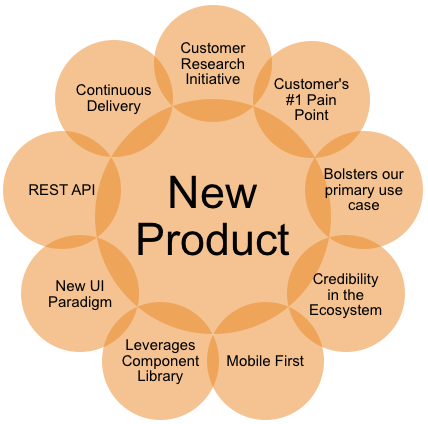
Then, one by one, I had representatives from each department stand up and speak to other facets of the product.
Professional Services described the lengths they would go to just to provide a makeshift remedy to the customer's visibility problem.
Engineering and Ops took turns talking about the speed at which we would be able to deliver updates to the product and how much our entire deployment had improved as a result of launching this app.
UX gushed about how the new app leveraged a recently developed component library and how it help to launch a new UI paradigm for the company.
Sales and Marketing weighed in with the overwhelmingly positive response they were getting from the early previews we had been sharing with prospects and customers.
And so on. By assigning each of them a dedicated speaking role and by giving all the contributions equal weighting, I was able to relate a shared victory for everyone.
GET THE CEO TO WRAP IT ALL UP WITH A ROUSING FINISH
I would have been happy enough with just the departmental contributions, but to end on an even higher note, I asked our CEO to supply his own thoughts on our newest product. In a brief but stirring, unrehearsed speech, he shared his appreciation for all our hard work and for the company-wide commitment to product innovation.
It was well-received by all.
The impact
To say the Release Preview went well would be an understatement. We had the largest employee turnout ever for an event like this and I received a great deal of positive feedback afterwards. One of the recurring messages was that we might want to reserve additional, spillover conference rooms in the future to accommodate more of our folks in the office!
I thanked all the speakers individually for their participation and gently reminded them that we still had more work to do to make the official launch a success. At the end of the day, with all the solidarity we generated, I couldn't help but feel that success was, if not inevitable, then certainly more attainable.
Look for more reports from theProductPath around product reviews, releasing products, and product culture here on PM Decisions.
More articles from our blog PM Decisions

Pull a large MVP-less feature from the next release
In recognizing that an important but poorly scoped product initiative was slipping further behind, I decided to push it farther back on the roadmap.
The Product Decision: Drop the feature from the next major product release and reinvest in some proper scoping.

Flickr image source: http://tinyurl.com/pl7xl4w
In recognizing that an important but poorly scoped product initiative was slipping further behind, I decided to push it farther back on the roadmap.
I would argue that our organization is actually quite Agile-minded but we have more work to do before we can start scheduling product releases in units of weeks rather than months. In our current state, we have to treat releases with a bit more care as they don't come around that often. So when we target a major product initiative to be completed and deployed in a future release, it is critical that we drive toward the date. Any slip could delay the feature by a month or more and that can have significant customer implications.
I had recently given one of the PMs on my team a real juicy assignment. We had determined, through some solid customer research, that one of the core features of the platform was in need of an overhaul. In matching up usage data with anecdotal user feedback, we recognized that the problems would require more than a few simple enhancements. This was indeed a large product initiative and was lining up to be one of our strategic product achievements for this year.
One of the core features of the platform was in need of an overhaul.
What drove this decision
We had been wrestling with all the usual challenges of developing a new product feature on a tight schedule. Some requirements required further clarification. Web page and email designs required rounds of tweaking and tuning. Plus the Engineers were being pulled away periodically to troubleshoot and fix other, non-related bugs. And then there was the Operations team who had planned a major infrastructure upgrade that created additional chaos, especially as we depended on those same resources to deploy the new feature.
I could go on, listing distractions and blaming other parties. But the number one reason for the slippage was simply subpar product planning. The PM had not done a good job in decomposing and staging the required work. After a few months, we had created some great new software but no shippable product.
The decision: Drop the feature from the next major product release and reinvest in some proper scoping
About a month before the next big release, it had become increasingly clear that we would not finish developing the feature in time to validate it thoroughly with our users. In our culture, we place a high value on both sticking to our release dates and only shipping product features that are user tested. The first constraint often governs the second.
The decision to drop the feature at this point in the release schedule may have been a bit precarious. But it was really only the first step in a series of related actions that kept the Product and Engineering teams busy for some time.
Plan of attack
As it turned out, our poor product planning had resulted in even more work than you might expect from what seems like a straightforward decision. We desperately needed to put this particular feature back on the right path but there were now some additional tasks that would enter the work stream.
REVERT TO THE OLD FEATURE
So confident had we been in our ability to complete this feature (including functional, performance, and user testing) that the team had started dismantling the legacy functionality.
Now we had to re-mantle it. Or more specifically, we had to back out some of the new enhancements in order to restore the old feature. No self-respecting Engineer enjoys this kind of work and indeed it cost the Product Team dearly in terms of credibility.
ADD A FEATURE TOGGLE
In order to preserve the progress that had been made, we invested some additional time in creating a true feature toggle that would allow us to enable the new version for individual customers. This provided us with the option to conditionally test the new functionality, as soon as it was available, with some of our more curious and perhaps more forgiving users.
RE-SCOPE AND RE-PLAN THE FEATURE
The bulk of the work came from decomposing the originally planned feature into smaller stories and creating a revised, incremental delivery plan that would help us deliver a true MVP first and then, in subsequent iterations, a series of progressive improvements.
Flickr image source: http://tinyurl.com/on6nch5
I will not use this report to describe the detailed process of scoping a product feature. There are many good discussions around discovering the Minimum Viable Product or MVP. To be sure, it takes practice to learn how to be ruthless. Good PMs find ways to whittle away at a product or feature until there are no nonessential elements remaining.
But it takes a different set of skills to then carefully plan the gradual introduction of those elements over time. It can be tempting to load up on enhancements, especially as product adoption increases among customers and users. Discipline and care are traits to be nurtured and celebrated in your Product Managers.
RESET EXPECTATIONS
As I mentioned earlier, this feature, when complete, is intended to make a big splash with customers. In making the decision to postpone its deployment, I now had the delicate task of resetting expectations with our Sales team, with Professional Services and Support teams, and with the few customers and prospects we had been engaging with for testing and research.
The impact
The existing customers and new prospects that were pining for this feature were disappointed with the decision to pull and postpone though I believe the blow was cushioned in two ways. First, we notified them of our product decision several weeks ahead of the release instead of only days before or even worse, after the release.
Second, we took care to explain that we did not feel comfortable pushing a significant new product feature without appropriate user testing. Not to say that this relieved all the anxiety but it is more difficult to argue with the choice of product quality over speed to market.
One final note. The Product team did consider moving ahead with a nearly complete version of the new feature and including it in the upcoming release. The thought was that we would have the ability to turn it on for a few, select customers in exchange for some heavy usability testing. I will publish more on that approach in a separate article.
Look for more reports from theProductPath around planning products and releases, MVPs, and product culture here on PM Decisions.
More articles from our blog PM Decisions
In an attempt to summarize our collective accomplishments over the past 12 months, I decided to create a simple, 1-page chart that communicates the product advancements and highlights remaining product opportunities.
The Product Decision: Use the familiar customer process as a backdrop for reporting finer-grained enhancements across the entire product suite.