
Sync up with Product Marketing
Over the past weeks, I had lost touch with my colleagues in Marketing, so I decided to take advantage of some mutual schedule alignment and catch up with our Product Marketing Manager.
The Product Decision: Regroup with my counterpart in Product Marketing to get our collective and connected plans in order.

Flickr image source: http://tinyurl.com/nwkerlx
Over the past weeks, I had lost touch with my colleagues in Marketing, so I decided to take advantage of some mutual schedule alignment and catch up with our Product Marketing Manager.
“The product marketing team member is responsible for telling the world about the product, managing the external-facing product launch, providing tools for the sales channel to market and sell the product, and for leading key programs such as online marketing campaigns and influencer marketing programs.”
On at least one previous occasion, I have mentioned how delightful it is to have a genuine Product Marketing Manager on the team. There is a distinct role for Product Marketing that sometimes doesn't manifest in product companies until they've reached a certain stage in their growth. Until then, those key activities and responsibilities will be carried out by people in other positions, who probably already have too much to do.
I was one of those people.
Our company had finally reached that growth stage and now had a full-time PMM who was in charge of tackling the myriad tasks associated with taking our products to market.
What drove this decision
As you might expect, our new PMM became busy as well, dashing any aspirations I had of working side by side with her on a regular basis. We both still had many other priorities competing for our respective time.
But there had been some early achievements. Over the past few months, I was able to transition the Release Communication planning that accompanies each formal product release. Neither of us was ready to put those tasks on auto-pilot just yet and expected to do some additional tweaking. Beyond that, we were eager to tackle a whole host of new product-related activities that we would now be capable of performing. This would require more coordination.
The decision: Regroup with my counterpart in Product Marketing to get our collective and connected plans in order.
I will admit that, up until recently, my priorities and focus around go-to-market had always been more short-term in nature:
- How do we pull together and update all the product collateral for the upcoming product release?
- Who is writing the Release Notes, delivering the webinar, training the Sales Engineers?
- What needs to change on the marketing website, in the knowledge articles, in our sales presentations
- How are we communicating changes, if any, in our pricing or bundled offerings?
- Do we have customers that can help us with promotion via testimonials, reviews, or case studies?
All these questions and more are now being fielded by our PMM but I still care very much about the answers and outcomes and, in many cases, am still on the hook for supplying some of the critical details.
Plan of attack
Weeks had passed with very infrequent contact between us so we had more than a few ducks to get in a row. We had to square away some short-term tasks and also finalize a few of our longer-term projects.
Revisit the Release Communication Plan
We had been executing well on the Communication Plan for the last few releases. It was now a familiar exercise but one that still requires coordination. Given that this was our last big push of the year, we were both hoping to finish strong.
Methodically, we walked through our checklist which included, among other things:
- Creating the material, prepping, and rehearsing for the post-release webinar
- Sending the series of teaser emails to customers to register for the webinar
- Conducting brief user surveys before and after the release
- Crafting a press release for one of the prominent new features
- Refreshing the internal sales collateral to better communicate the enhanced product messaging
- Updating the technical sales demos to reflect the product updates
Prep for upcoming talks with Analysts
In a few of our larger sales opportunities, we were painfully reminded of how important it was to have visibility with prominent industry analysts. In response, the company had launched an initiative to get us back on the industry analysts' collective radar and re-introducing them to our latest and greatest from the product side was a big part of that push.
Building on some introductions and (albeit brief) conversations we had had with analysts at a recent trade show, the PMM had set up some individual briefing calls to re-engage with these industry experts. She and I walked through the schedule and the best way to approach each call to maximize credibility with our larger customers and prospects.
Complete last steps of new product launch

Flickr image source: http://tinyurl.com/qb836wj
One of the best things to happen this year for me was launching a brand new product to the market. It was my first since stepping into the new role and I was eager to see it take off.
The PMM and I had been executing a solid product rollout plan for several weeks now and we were nearing the end of the operation. The final steps were to get the new product listed in a prominent app store, and then begin a vigorous campaign with the Sales team to introduce and upsell the app to existing customers.
We confirmed that after testing the response from our core base, we would ramp up the product marketing efforts and make a much stronger push to the greater market.
The impact
It is a satisfying feeling to get caught up when you feel behind. We both came away from our meetings this week more confident about our plans for the rest of the year. In my opinion, regular email-based discussions and ongoing status updates are often adequate but, for the critical matters, I'll take uninterrupted, face-to-face meetings any day of the week.
Look for more reports from theProductPath around product releases, managing stakeholders, and product feedback here on PM Decisions.
More articles from our blog PM Decisions

Guide and advise fellow Product Managers
After many rounds of discouraging conversations with less experienced and struggling Product Managers both inside and outside my own company, I decided to assemble and share some helpful resources for advancing one's own PM career.
The Product Decision: Create simple orientation assignments for Product Managers who have a genuine appetite for advancing their careers.
Flickr image source: http://tinyurl.com/plxquqy
After many rounds of discouraging conversations with less experienced and struggling Product Managers both inside and outside my own company, I decided to assemble and share some helpful resources for advancing one's own PM career.
I believe that we are still in the early development stages of the Software Product Manager (SPM) role and also, that there is a general lack of clarity around this particular breed of Product Manager. That would certainly explain the flood of books, articles and similar resources all aimed at helping PMs understand and navigate this career path. But along with those are an even greater number of online conversations that seem to add to the confusion by attempting to explain it.
Here are a few of the top links returned when searching for "What is a Product Manager":
- What, exactly, is a Product Manager?
- Product Manager 101: What Does A Product Manager Actually Do?
- A Product Manager's Job
- Product Managers: Who are these 'mini-CEOs' and what do they do?
For someone who has recently landed their very first Product gig or is just looking to transition into becoming a Product Manager, this visible and honest industry conversation is simply an indicator of how confusing it can be to get started. And while there are some terrific resources being developed, most new PMs don't even know where to begin.
What drove this decision
Closer to home, I knew of three individuals at different stages in their own PM careers who were each struggling with the similar problem.
Arthur was already pursuing a UX calling and was a semester away from earning an advanced degree in that area but had spent enough time around Product people to become intrigued with the role and was now curious about whether he could do both.
Brandon had been tapped by his current company 2 years ago to take on a Product Management role after proving himself as a reliable project manager and was now convinced that he wanted to find his next Product opportunity to continue down this path.
Carl had been a Product Manager for several years but had received no formal training and while he had mastered the more tactical activities of getting customer requirements through Engineering to deliver features to customers, he didn't know where to start to improve beyond that.
I found myself in impromptu mentoring conversations with all three in the span of a single week. I took that as a good sign to revisit my own collection of PM material and pull together suitable resources for at least these three practitioners.
The decision: Create simple orientation assignments for Product Managers who have a genuine appetite for advancing their careers.
The challenge was not finding relevant material but rather curating the collection to zero in on the items that would have the biggest impact. I was looking for artifacts that would be easy to consume, that would provide good direction in the short term, and that might inspire them to explore topics even further on their own.
Plan of attack
These three colleagues were in different stages of their careers but I knew that all of them would benefit from some strong, foundational material. There is a growing body of informational resources for the SPM but I didn't have a place to point them to get started.
Required Reading (AND LISTENING)
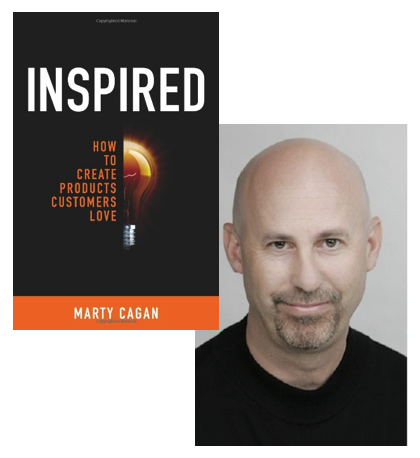
Inspired: How to Create Products Customers Love by Marty Cagan
The first question I always ask Product Managers who are just getting started is whether they've found and read Marty Cagan's book, Inspired - How to Create Products Customer Love. I have received nothing but rave reviews from every person to whom I've recommended this book.
I consider it required reading -- and re-reading. It is easy to consume and is filled with great advice for PMs at all stages. But perhaps the greatest benefit for an early-stage Product Manager is that Cagan clearly outlines the role itself and distinguishes it from the related but often overlapping functions of Project Manager, Product Marketer and UX Designer.
And If you need a break from reading, I can't recommend enough the amazing podcast, This is Product Management, created and hosted by Mike Fishbein. Each episode provides a fresh and unique perspective on this incredible role. Mike recruits inspiring guests who generously share their experiences working in and around the Product function.
Your New PM Job
Gopal Shenoy provides a Getting Started guide for PMs
I then turned our attention to what Product Managers should be thinking about in their early days on the job. Some years back, I came across this wonderful article written by Gopal Shenoy called Software product manager’s first 30 days at a new job …. In it, he lays out a great guide for what good PMs do (or should be doing) in their first few weeks. The list is extensive and a little intimidating - perfect for setting a new PM's expectations.
I encouraged Arthur and Brandon to digest Shenoy's 30-day list and create a distilled version for their own use. And if they made it through that, I further suggested that they read his companion article on what to do in the next 45-90 days.
Brandon is actively interviewing but had not yet found some of the great resources that the PM community has contributed for job hunters. I encouraged him to take a look at one particularly interesting app at http://www.thepminterview.com. The author leverages material from Cracking the PM Interview and Decode and Conquer to create an online, interactive exercise where you can practice your answers to sample interview questions.
Formal Training Programs and Peer Groups
I pointed Carl, who was already embedded on a Product team, to look into cursory workshops and/or full, multi-week courses created specifically for Product Managers. There has been an increase in the number of online or self-guided options from companies like Udemy, but I encouraged Carl to look at local options such as General Assembly's 10-week course or the Pragmatic Marketing program. I explained to him that he would enjoy the added benefit of meeting and networking with peers in his own community.
And speaking of networking, I am a big fan of getting plugged into monthly meet-ups and similar informal, after-work forums related to your career choice. Every month, more and more opportunities spring up for Product Managers to meet and share ideas. I told Arthur, Brandon, and Carl to sign up for an upcoming event in our city and even offered to accompany them.
On the Job Training
Fall in love with a product framework
I prefer to give tactical advice when I can. So I followed up on my previous recommendations (read this book, take this class, join this meet-up, etc.) with a single proposal that I would expect each of them to incorporate differently on their own product paths: fall in love with a product framework.
Over the years, the greater Product community has created and shared many formal templates, authoritative checklists, proven models and reusable processes. A few of these attempt to address the entire product lifecycle but I believe that would be exhausting for an up-and-coming PM to consume, much less apply in practice. Instead, I advocate that new Product Managers zero in on a more discrete area, by starting with what interests them the most.
I used this approach when I was first getting my bearings. I was overwhelmed by all the material and product experts I encountered and was struggling to find any method that I could confidently apply. I eventually discovered Marty Cagan's Opportunity Assessment and used this as a foundation for my building my own method.
And I wouldn't discount the searching process itself. You will inevitably stumble onto new ideas just by sifting through the still disperse product knowledge base to find frameworks that interest you.
Volunteer to do a PM's Job
And what do you do with this new framework you've recently embraced?
I was once told that the best way to get into Product Management is to start doing it. This guru urged would-be PMs to hunt down the closest Product team (or whomever is performing that function) and offer to assist. As someone running a Product team, I genuinely like that approach. But I would argue that showing up empty handed is not as attractive as arriving with expertise around some useful tool that the Product team can use to improve discovery, planning, or execution.
The impact
Ultimately, it is up to Arthur, Brandon, and Carl to move forward at their own pace. I'd like to think my advice is helping them to navigate but I feel like we're still far away from having any kind of proven curriculum. Despite that, I'm seeing more and more people gravitate to this kind of role - and I'm encouraging it. The Product community is fortunate to have professionals from so many disciplines join our ranks, making us a much stronger collective.
Look for more reports from theProductPath around Product teams, PM credibility, and the PM role here on PM Decisions.
More articles from our blog PM Decisions


Complete an Opportunity Assessment for proposed new product
After disappointing results from my previous attempts to stall the momentum building around this "must-have" component, I decided it was time to break out the heavy artillery.
The Product Decision: Use Cagan's Opportunity Assessment to approach this product decision with more rigor and less bias.
Flickr image source: http://tinyurl.com/q23ggld
After disappointing results from my previous attempts to stall the momentum building around this "must-have" component, I decided it was time to break out the heavy artillery.
If you had read any of the articles leading up to this post, you might conclude that I have been fighting a losing battle. Indeed, I have been chronicling the story of my struggle with this new product idea over the past few months:
- Head off a new product idea
- Clarify win-loss speculation with post-mortem interviews
- Build a quick proof-of-concept
Each of those product decisions was driven by healthy skepticism around my company's impulsive and in my opinion, short-sighted product recommendation to build an MS Office plug-In. For the record, I'm not against this product idea at all. The campaign I'm engaged in here has more to do with making good, long-term product investment decisions.
What drove this decision
New product decisions should not be driven by fear, such as the purported threat of some competitor's offering. Likewise, they should not be pursued just because the solution appears to be simple to build or is otherwise easily accessible. There are so many more factors that should be considered. And they should be considered together, holistically.
What I needed was a way to communicate the whole picture to my stakeholders. I wanted to engage in an open discussion around all the decision criteria. And I wanted to come into this conversation with the main talking points already distilled from a more thorough study and backed up where possible, by actual data from relevant research.
The decision: Use Cagan's Opportunity Assessment to approach this product decision with more rigor and less bias.
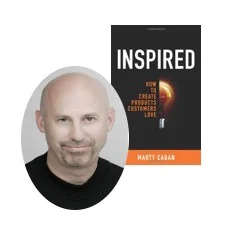
Marty Cagan's Opportunity Assessment is described in his book Inspired - How to create products customers love - a must read for Product Managers.
This product decision really had 2 parts. First, I knew that I wanted to use Marty Cagan's Opportunity Assessment, which is an excellent and straightforward framework for evaluating new product opportunities. I think it is one of the best tools a Product Manager can have in their "belt". I deploy it whenever I encounter exciting new ideas - my own or another's. The Opportunity Assessment helps you exert solid due diligence before a good sounding proposal gets too far along.
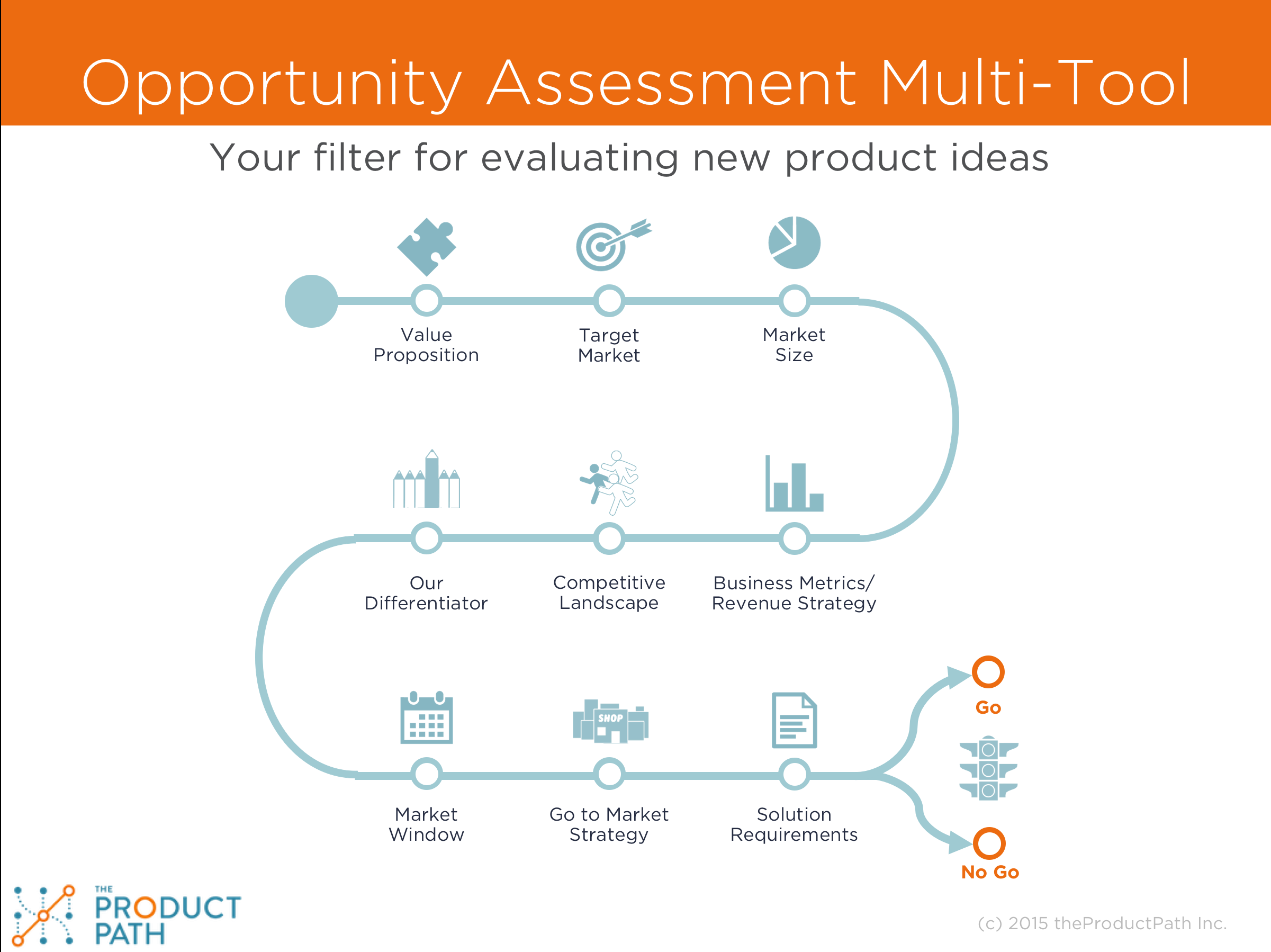
Second, I wanted to use the Multi-Tool, a PowerPoint-based tool created by the team at theProductPath for this exact scenario. The Opportunity Assessment Multi-Tool puts Cagan's framework into an easy-to-use PowerPoint structure where the user can capture, then distill, and finally present the Assessment all using the same tool.
Plan of attack
In this particular instance, Cagan's framework lays out the "plan". I stepped through each of the questions of the Opportunity Assessment capturing my answers as best I could. Using the Multi-Tool, I was able to focus on each question in isolation, using the "scratch area" on each slide to record all my rough notes.
When I felt I had sufficient material for a given topic, I distilled a shorter version of the notes in the "summary area" on the left side of the slide (the Multi-Tool shows these boxes in presentation mode while hiding the draft notes).
Below, I have included copies of my rough notes for my company's proposed Office plug-In product. At the end of the article, you will find the distilled version of the notes that I used for the stakeholder discussion.
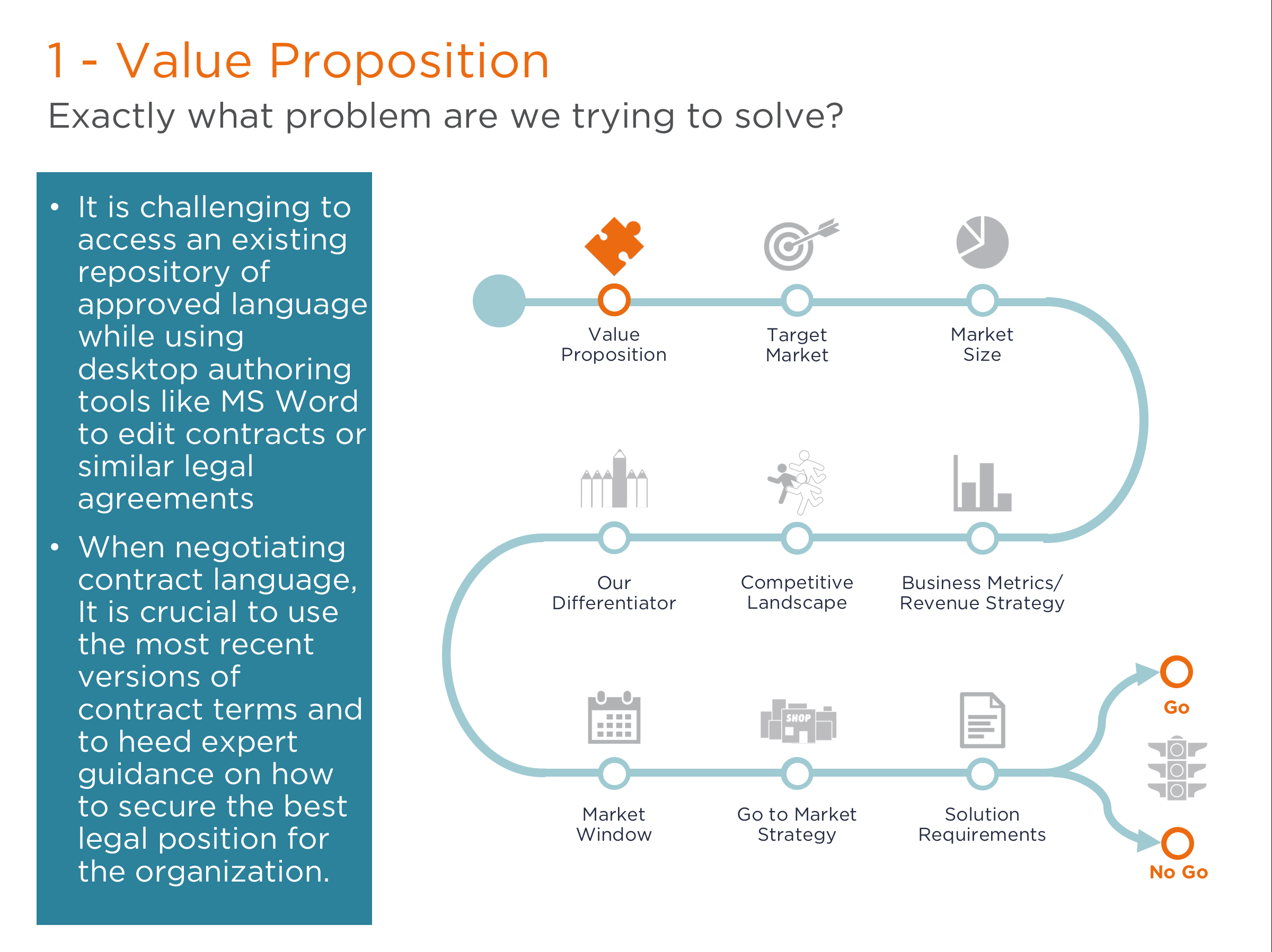
1 - Value Proposition
I started the Opportunity Assessment by looking at the problem we are trying to solve - not the solution itself. Note that it can often be difficult to focus only on the pain and not talk about the way you or your customers would like to solve it. But here - and this is important - we are trying to assess the opportunity itself, so we can ultimately decide if it is worth solving.
In my case, I had spoken to enough customers and prospects to know that using a cloud-based content repository presented challenges to teams that traditionally work with desktop authoring tools like MS Word.
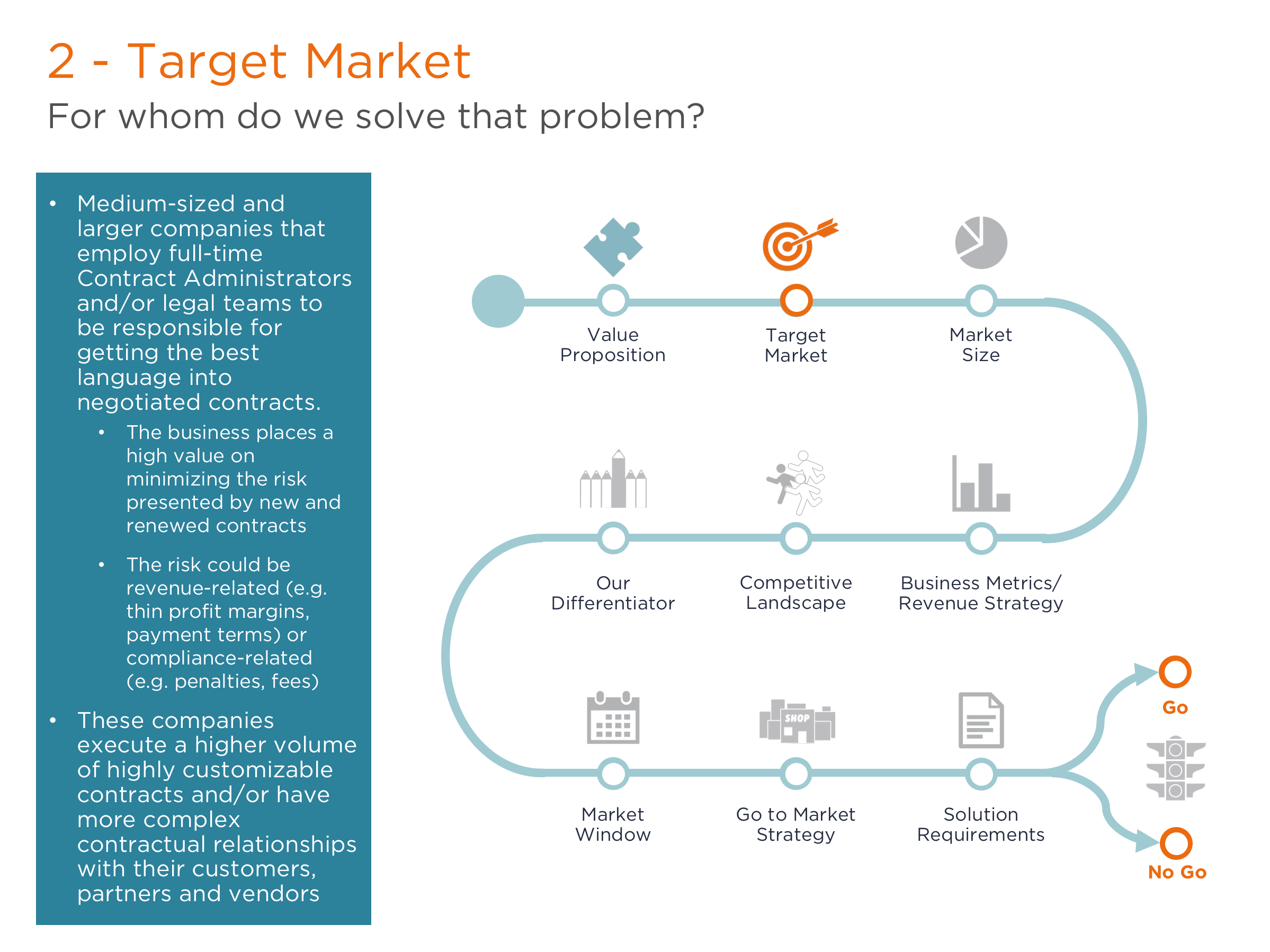
2 - Target Market
The next step in the Assessment is to clarify exactly who is struggling with the problem(s) identified in question 1. When you have answered these first two questions, you have the foundation of a solid Problem Hypothesis: we believe that [the target user] has problems with [specific task(s)].
I had been able to zero in on the Legal teams as the target users in our customers' organizations who were most struggling with accessing their cloud content from their desktop tools.
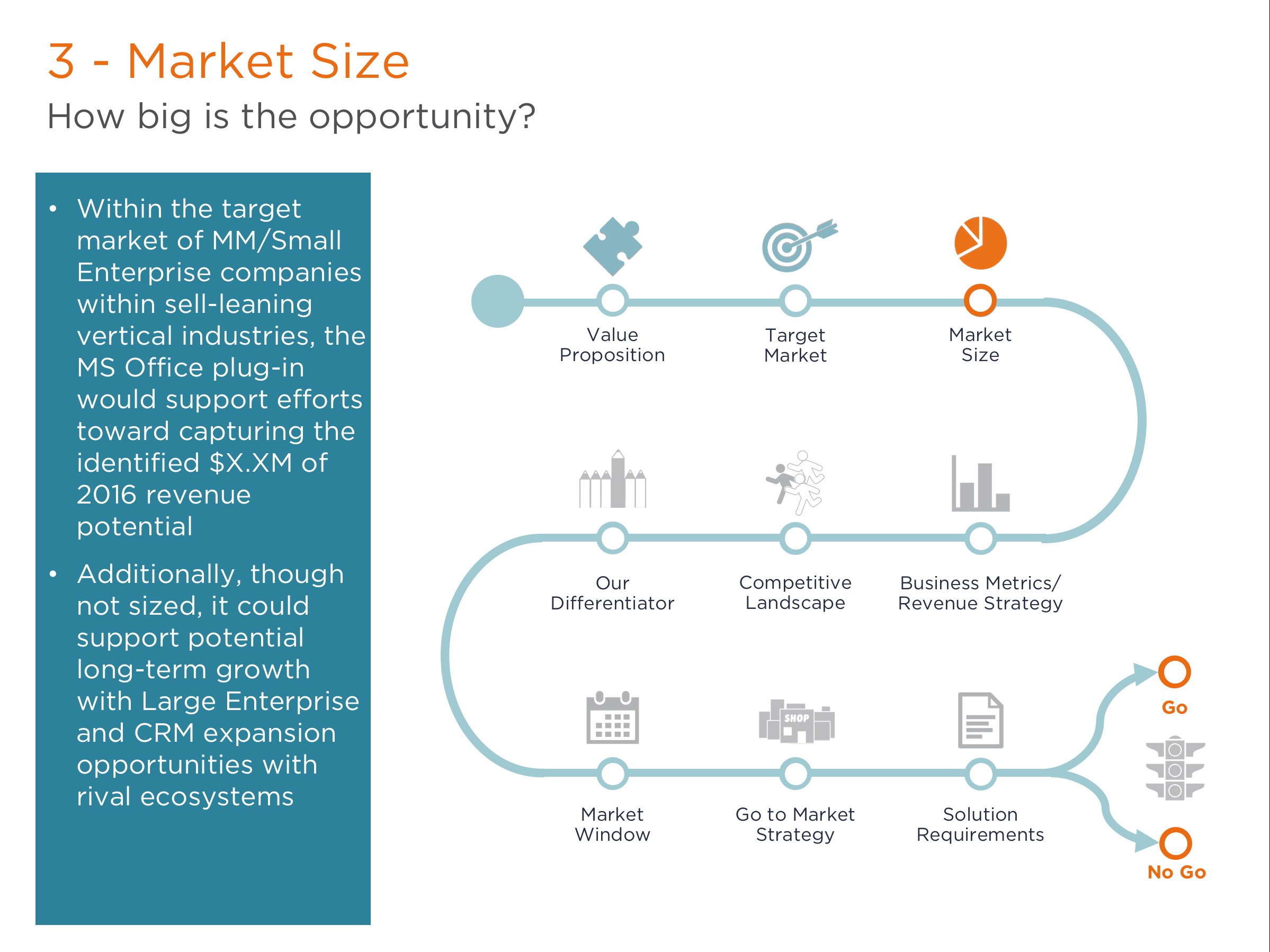
3 - Market Size
When you are confident that you know who has what problem, your next task is to determine just how many of these users exist out there. This will give you a sense of your potential market size and should be a good early indicator of whether you're chasing a real opportunity or not.
As you might guess, some of the information in my particular Assessment is sensitive and I have further sanitized it for this article. As compensation, I have included an image of the draft version of the slide where you can see some of the assistance the Multi-Tool provides in the form of notes and pull-out tabs.
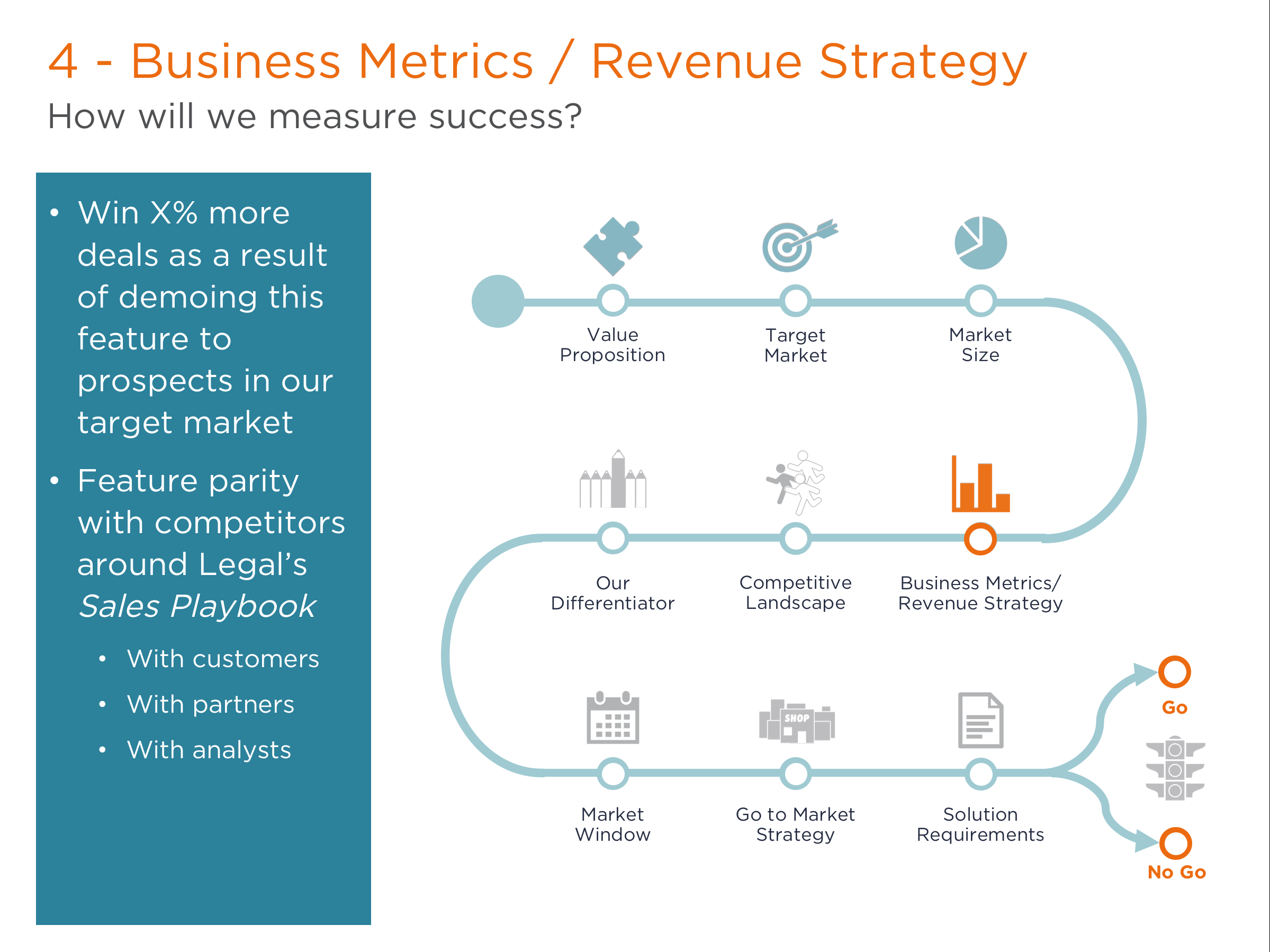
4 - Business Metrics / Revenue Strategy
The next topic forces you to think about how you will measure your success if you decide to proceed with the opportunity. I have found that too often, we push forward with new product development and even bring new products to market before we get agreement on exactly how that offering will help the business! That is exactly how we got into the situation I inherited where my company's product portfolio was bloated and unmanageable.
For this assessment, I simply created some placeholders for the ensuing conversation with my stakeholders. I wanted them to be thinking about the revenue impact on our business for sure but also how our customers, our partners, and even industry analysts would ultimately measure our extended product portfolio offering against our competitors.
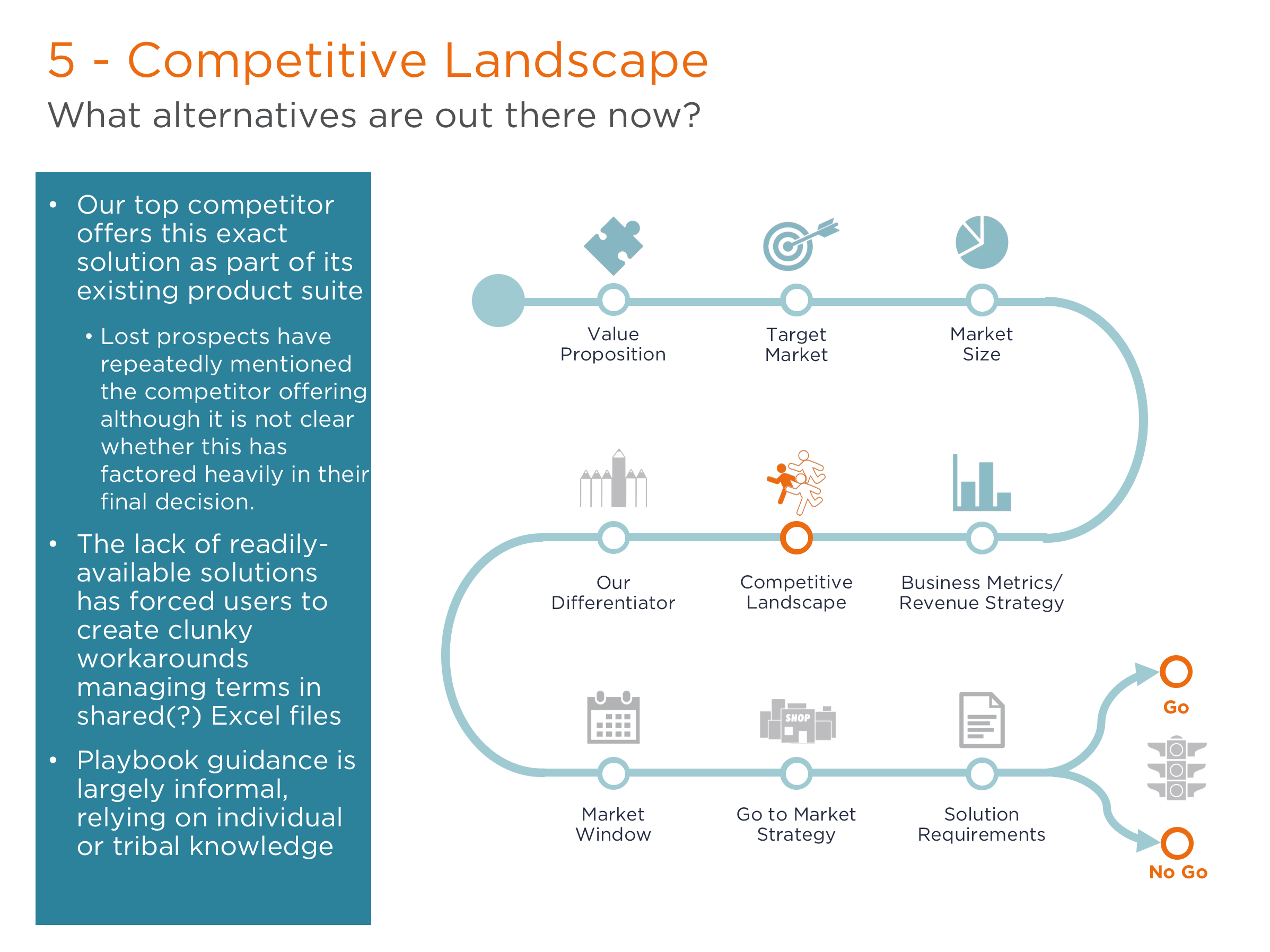
5 - Competitive Landscape
Now we come to the competitors, or more accurately, the competitive landscape. Because the truth is, you don't always lose deals to another vendor. Sometimes, it is inaction or the prospect's failure to make a decision. Other times, the customer just decides to live with the pain or finds some acceptable workaround.
In our case, I knew what customers had been doing to get by and we had a pretty good idea of what our primary competitor was offering. All the signs would seem to be pointing us toward building our own solution that was more attractive than both the existing alternatives.
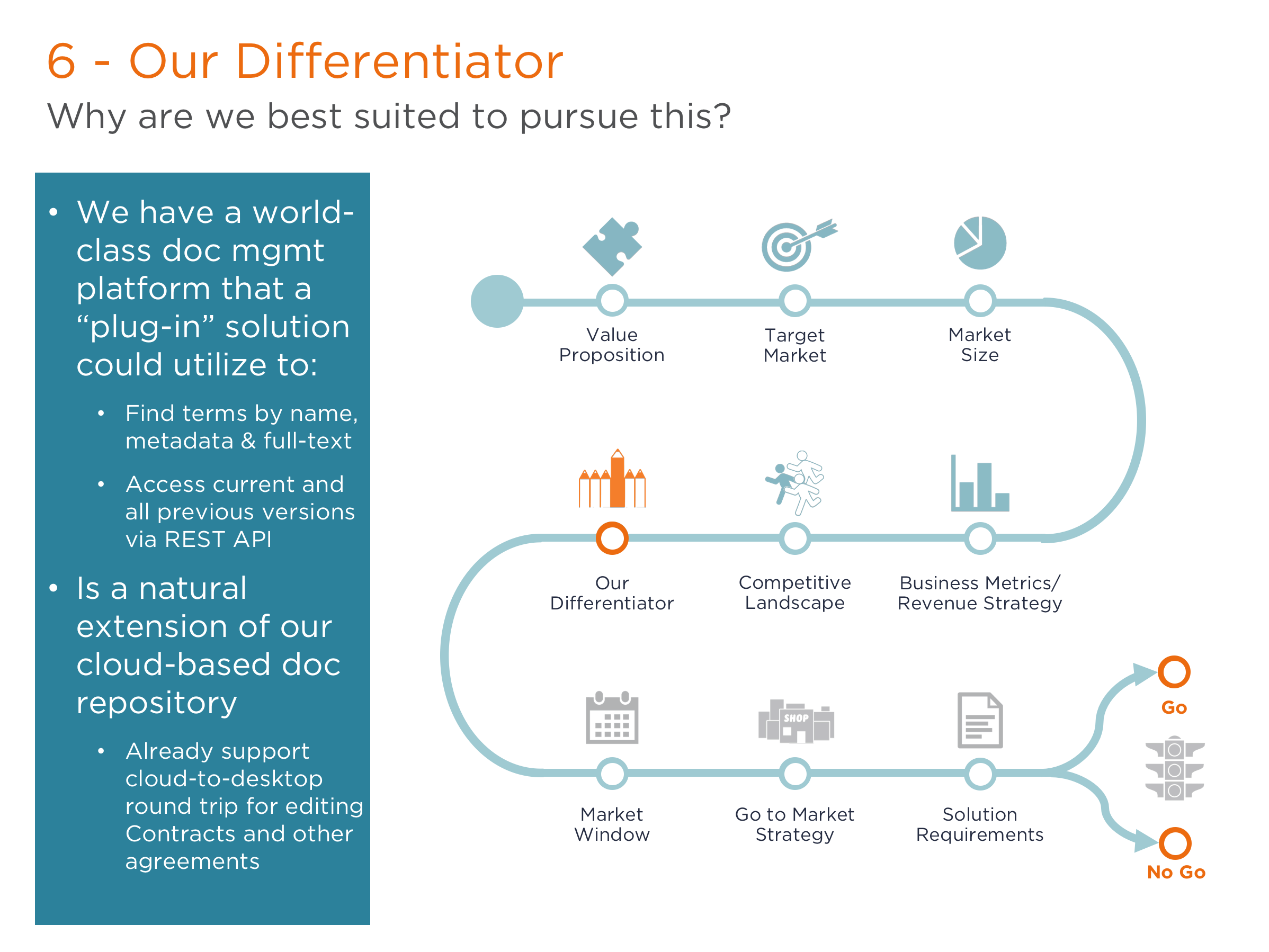
6 - Our Differentiator
At this point in the Assessment, it is time to look within. In short, you need to determine, as honestly as you can, why you feel that your company is uniquely positioned to address this opportunity. Put simply, this question is, essentially "why you?"
I saw the customer's problem as a content-related one, and that was certainly within our wheelhouse. Compared to the broad range of functionality we already provide both in the browser and in other desktop applications, I felt that we would be confident in delivering a compelling solution here as well.
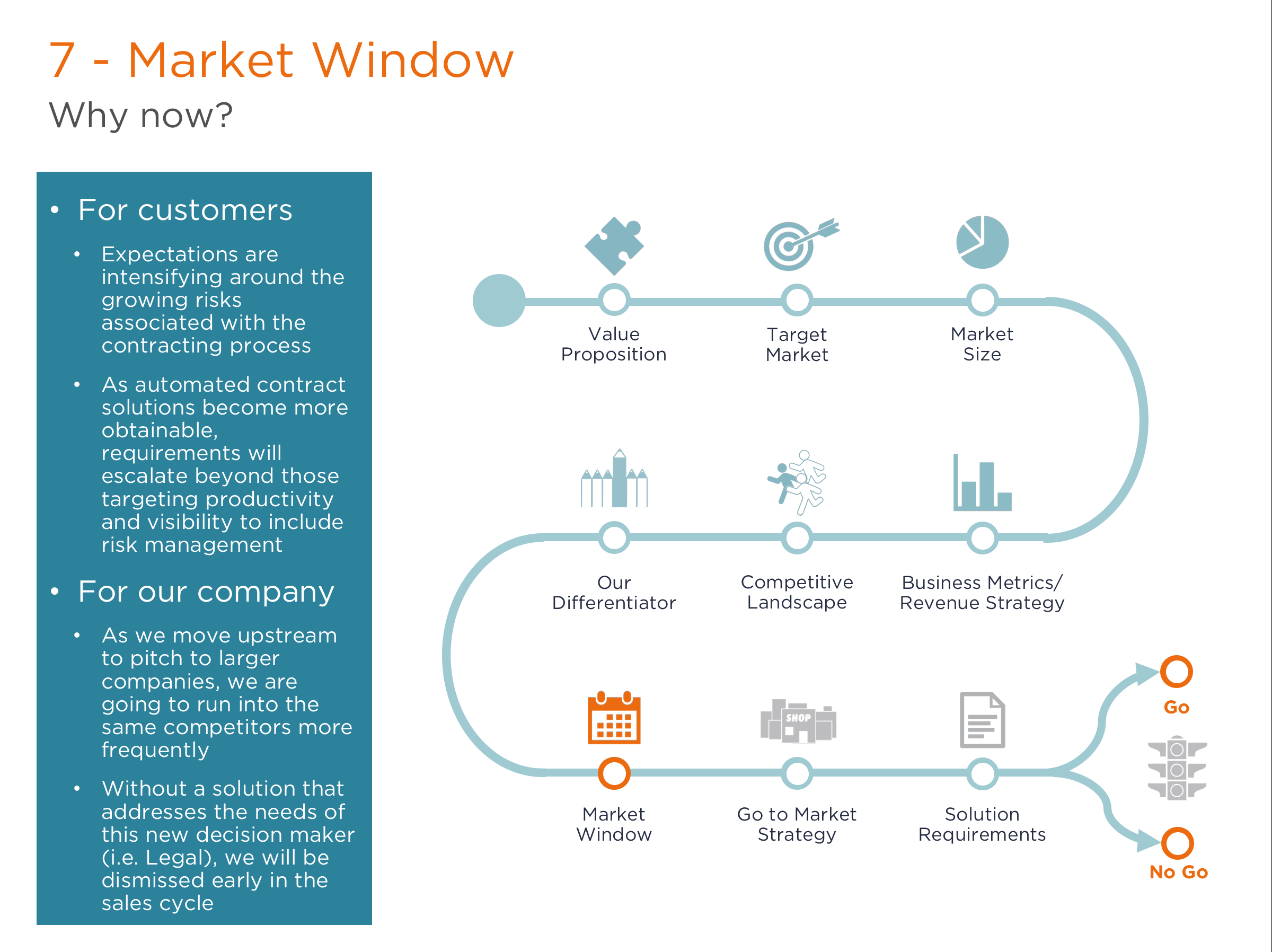
7 - Market Window
If the previous question was, "why us?", then this next one could be summed up as, "why now?" Even if all the previous answers had trended more positive than negative, you can still get hung up here.
For example, perhaps the overall market of your prospective users is known to be shrinking. Or perhaps the technology you need to build the product is still immature, giving you good reason to pause. Or maybe it is as simple as postponing this opportunity until after you complete other in-flight projects.
I think my company actually does have some urgency and that if we were indeed going to head up market, then we would need functionality like this to stay competitive. Even though I was still unconvinced that the entire opportunity was worth pursuing, I couldn't deny that the timing was right for us.
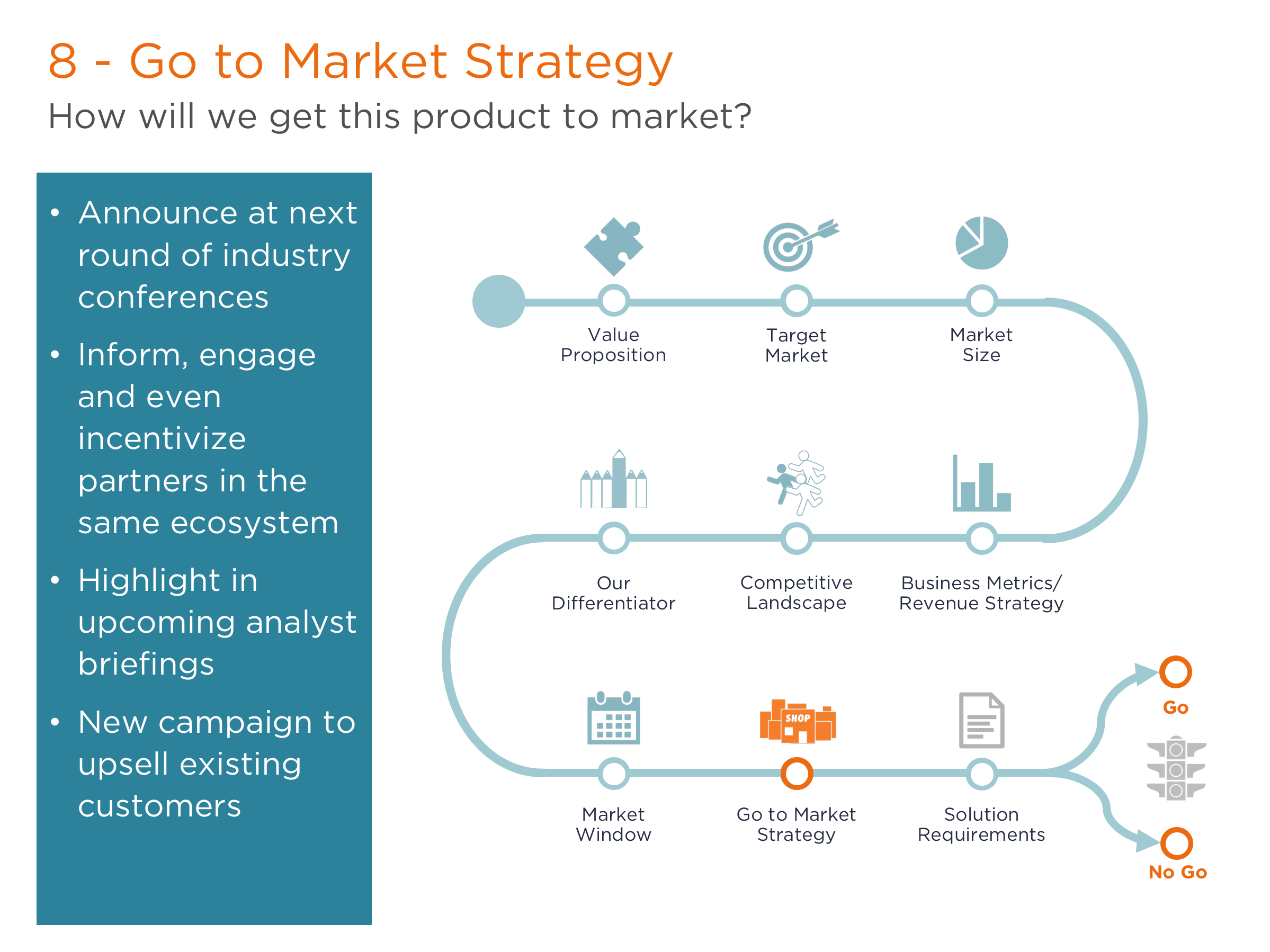
8 - Go To Market Strategy
All the white boarding and prototyping and story writing and development and QA and deployment won't amount to a hill of beans if you don't execute on your go to market plan. Think carefully about this topic as you consider how you will get your new product in front of your customers. Do you already have the channels in place or will you be exploring some unfamiliar territory?
This is another area where I have chosen to over-sanitize the material from my own Assessment. I would apologize but I'm sure you can appreciate the sensitivity of this information.
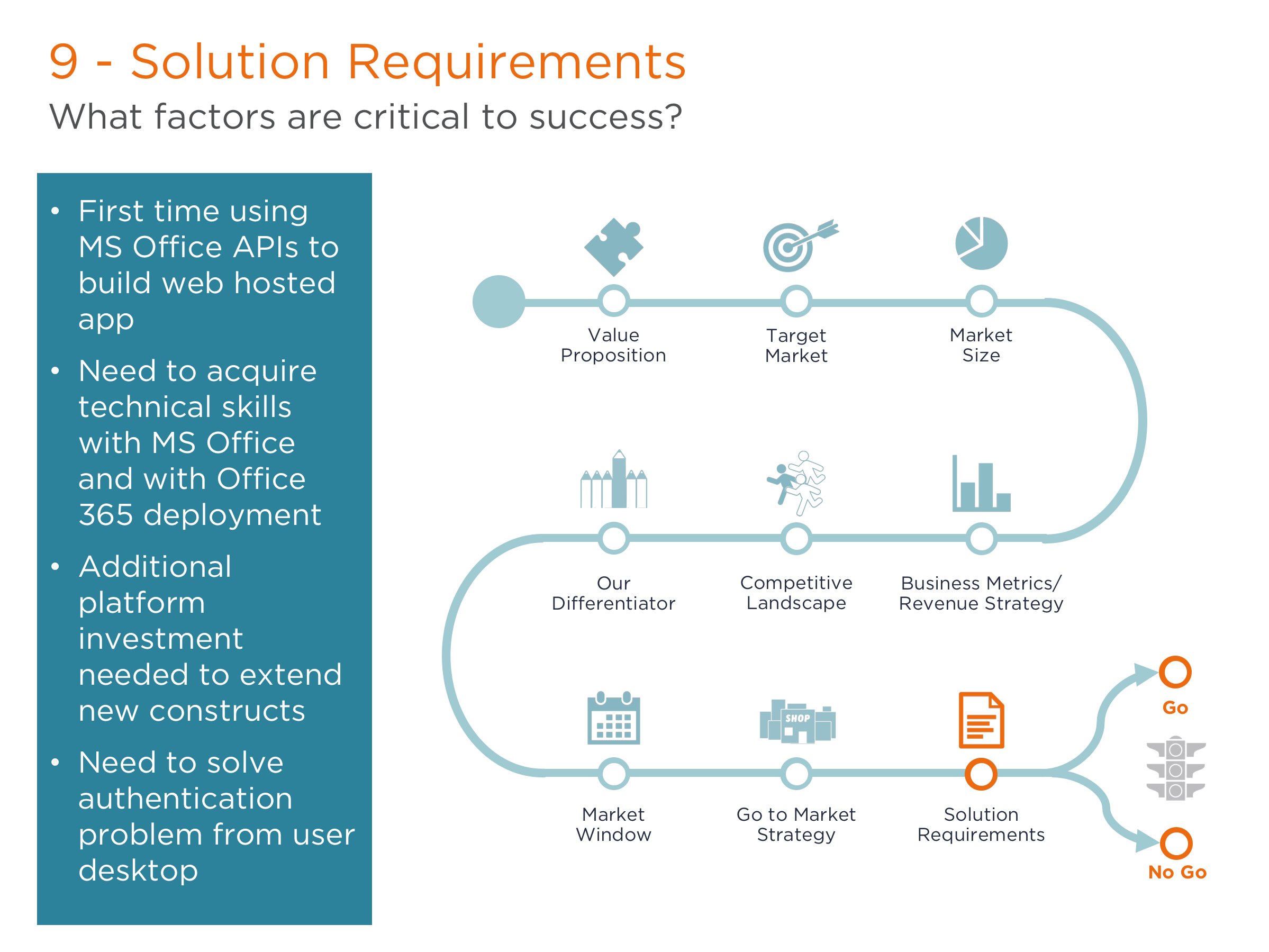
9 - Solution Requirements
If you've made it this far in your Assessment, congratulations - you're in the home stretch. This is where you sit with your top technical folks and have them spell out all the dependencies and unknowns that will affect your development plans. In my experience, this is often a sobering discussion. It's not that Engineers like to rain on parades, they are just blunt and frank by nature - but you need this information to help guide your decision making.
In our case, the list of requirements was quite long, especially considering that all the stakeholders had been assuming this would be an easy win. If I needed more ammunition to build the "no-go" case, then I could count on this laundry list to aid me.
The impact
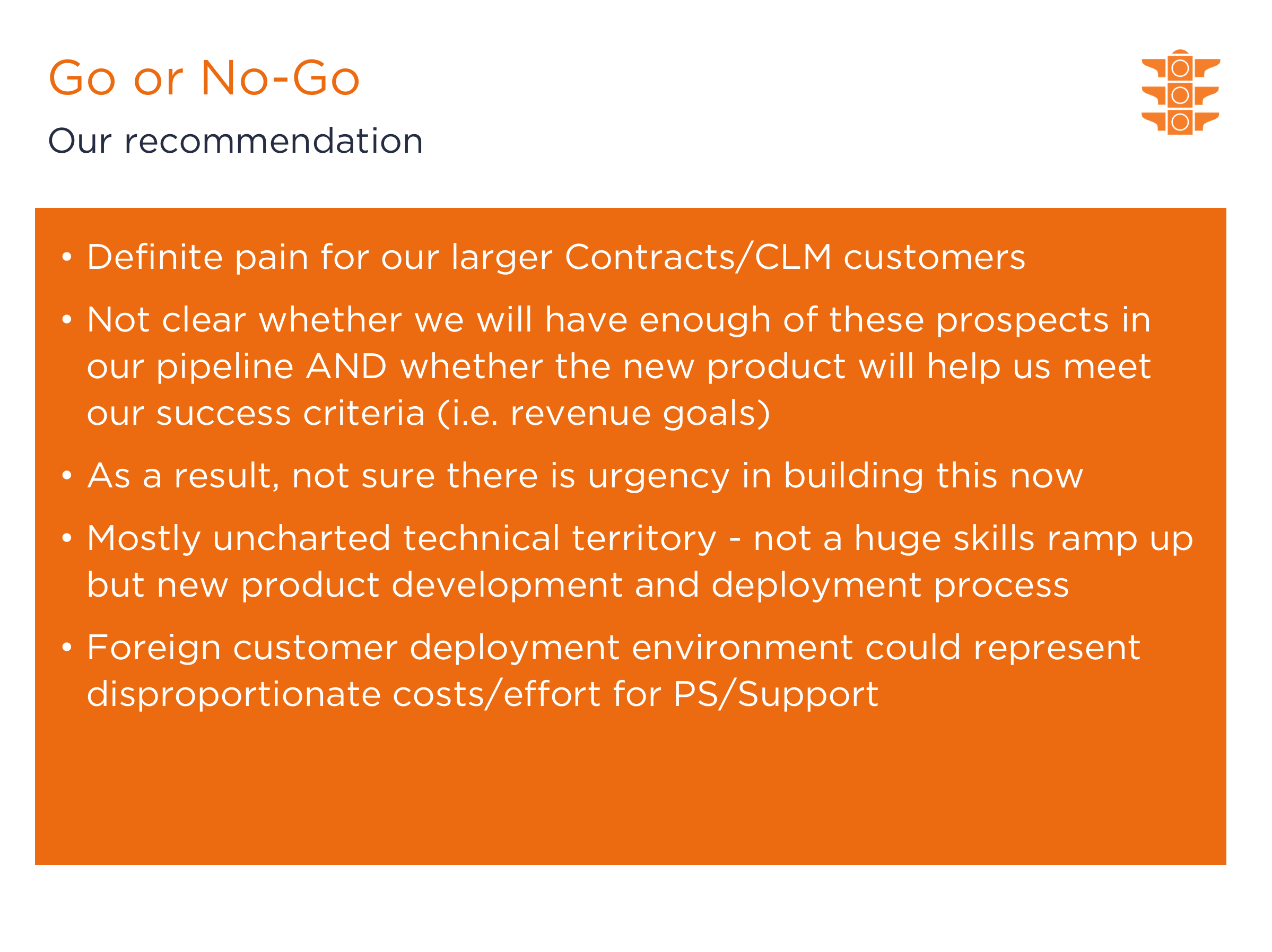
Cagan's Opportunity Assessment actually has 10 questions. The first 9 essentially prepare you for the last 1: the go/no-go decision. Many times, when using the Assessment, I can stop well before I reach the end when I can see that the target market is not big enough or when the timing is wrong, or when I don't have an obvious go to market strategy. You might think that those are frustrating outcomes but actually, I am always pleased that I arrive at that conclusion before I waste a lot of energy chasing a bad opportunity.
I have yet to share the entire Opportunity Assessment with all my stakeholders but they know it's coming. I'm looking forward to reviewing the information with them and although I'm fairly certain where we will end up, I am genuinely open to the group's collective reasoning.
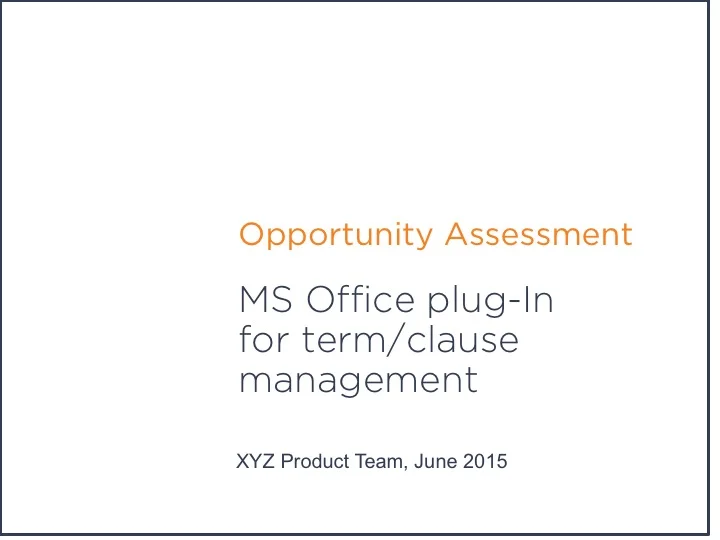
I mentioned earlier that the Multi-Tool is quite handy when you need to share your Assessment results with others. To demonstrate this, I have included the final Opportunity Assessment here, in presentation mode. Click through the slides to see how the Multi-Tool can also be used to create a beautiful presentation without any additional work. Just digest the best points from each question into the boxes on the left and start the slide show - that's it!
Look for more reports from theProductPath around opportunity assessments, product strategy, and managing stakeholders here on PM Decisions.
More articles from our blog PM Decisions

Head off a new product idea before it gains any more steam
In recognizing that a few, excitable executives were intent on charging ahead with plans to build an "answer" to a competitor's product, I stepped in to introduce some rational thought.
The Product Decision: Get the Exec team to back off their urgent new product ploy.

Flickr image source: http://tinyurl.com/jw7pso7
In recognizing that a few, excitable executives were intent on charging ahead with plans to build an "answer" to a competitor's product, I stepped in to introduce some rational thought.
I love exploring new product ideas, and that's especially true if those ideas and products are likely to help my company grow while delighting my customers. Brainstorming with other groups in the organization is healthy and I relish deep dive opportunities to learn more about their own struggles. Indeed, we have made some fantastic product breakthroughs over the past few years by collaborating across departments, thinking creatively and rationally about how to improve the business.
This was not lining up to be one of those situations.
As our organization was looking to head up market and seek out larger customer deals, we inevitably began to run into a new set of established vendors. One of these vendors seemed to be getting good traction in the sales process with a distinct feature that was noticeably absent in our own offering. And we quickly became fixated on that feature gap. And by "we" of course, I mean "Sales".
What drove this decision
“We’re getting our butts kicked!”
Our Sales team was anxious about a particular competitor and quickly became convinced that we had been losing deals - and would continue to lose deals because we lacked a comparable feature in our offering.
What was really missing was actual data to back up these arguments. It is fascinating to watch how quickly a Sales team can work themselves into a frenzy and then how other internal decision makers can get caught up in the hype culminating in an escalating product emergency.
At first, I thought I could just let the frenzy flame out on its own. For surely, if there really was strong customer demand, then I would begin to see more and more frantic sales people banging on my office door. Unfortunately, neither scenario came to pass and so, with not even a little reluctance, I was forced to contain (and ultimately smother) the flames by helping the Sales leaders more formally assess the actual opportunity.
The decision: Get the Exec team to back off their urgent new product ploy
To be clear, I try to never dismiss a product proposal outright and indeed, this particular suggestion seemed to have real merit. What I refuse to do is barrel down a "new product" path without having first made the solid case that the investment has a good chance of producing returns.
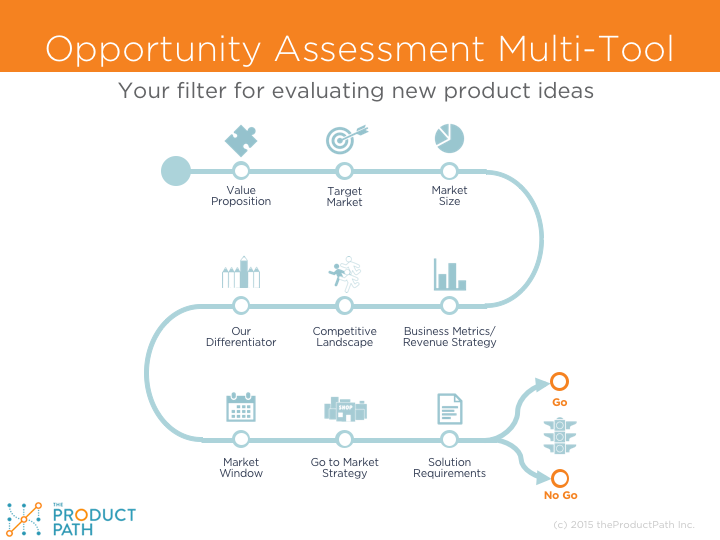
You can learn more about the Multi-Tool here.
At this point, I have to give a big nod to Marty Cagan who in my opinion, best summarized the technique for validating product opportunities in his book Inspired: How to Build Products Customer's Love. I feel so strongly about Cagan's Opportunity Assessment approach that I spent 6 months building a tool that helps Product Managers (and others) both develop and pitch Assessments to stakeholders.
My plan here was to use a simplified version of the Opportunity Assessment to push back on this most recent mania while at the same time, improve the way our management team approaches product decisions.
Plan of attack
My original idea of simply waiting it out and hoping the idea would die on its own, was failing. This became very clear when one of the execs unexpectedly called for a meeting where in just a few hours, we could "hash it out, create some wireframes/mockups that we could then outsource to an external development team". He made it sound so simple but what really concerned me was that no one seemed ready to question the approach. Inaction wasn't working - I needed a new approach.
A PM always has a few tricks up the sleeve to shut down a discussion like this. For example, you could go with "we don't have enough people", or "there are missing dependencies", or "the technology is not ready", etc. But these are short-term tactics. I had to make sure this type of request wouldn't pop up again in some whack-a-mole-style product game.
So, in the spirit of cooperation, I suggested that the assembled team be prepared to start that "hash it out" meeting with the responses to these points.
First make sure we understand the Pain
It all starts with a problem. You have to identify a particular pain you are trying to address and zero in on it. The pain can't be "our competitors have a feature we don't have" - it has to be customer-focused. We are in the business of identifying problems that customers have and will pay us to solve for them.
Let me start by saying this is harder than it appears. To do this well, you need to be able to separate particular actors from the problem. So instead of saying "Customers want to use their phones to check the status of their transaction", you downplay the user to better highlight the problem: "it is difficult to verify the status of a funds transfer when away from a computer."
Then make sure we understand who has the pain
Note in most cases, you will address the first two points at the same time. I have found it more useful to keep these separate so that you can independently verify that you understand the problem and that you can find the users that struggle with it.
After you've identified the problem, you then nail down exactly who has that problem. Is it college students? Is it college students between the ages of 18 & 20 that live on campus and whose parents deposit money once a month...before the weekend?
The closer you get to identifying a specific persona, the better off you'll be. It will not benefit your team's opportunity assessment if you define your target customer in terms that are too broad, as you will see in the next section.
Is there a real market for a product that solves this
If I could get the team to first agree on the problem(s) and then, who we believe has that particular problem or problems, then it's all downhill from there. Well, sorta. But we certainly can start to size the available market based on that persona. Sometimes it is easy to back off of an idea early on if you can determine that there really are not enough people to sell the product to. Or that you'll have a very hard time reaching them. Or that the customer's buying process is incompatible with your own sales cycle. And so on.
Really what I'm hoping to discover of course is whether or not there would be a positive revenue impact as a result of pursuing this product or enhancement. After all, we are asking the company to make a product investment. And smart business leaders should know better than to make investment decisions without some level of due diligence.
The impact
In this particular situation, I was certain that the answers to these (and any remaining) questions would lead to the conclusion that the new product idea was ill-founded. Indeed, we shut down the discussion in short order and went back to more productive work. But the bigger win for me and the Product team was that we had introduced a new tool that would ideally lead to better decision making, at least when it came to new products.
There are more questions to answer in the Opportunity Assessment (10 questions in Cagan's version) and certainly more than one sequence through the questions. I like starting with the plan outlined above because it is an efficient way to filter out premature and unfeasible product ideas early on.
But is can be used at any time in a product's lifecycle. In taking on the the "Head of Products" role, I inherited a product portfolio that I felt was too much for a company our size to manage. I have since begun the arduous process of reviewing each of our existing products and using the Assessment framework to defend or defeat each one.
Look for more reports from theProductPath around opportunity assessments, product strategy, and managing stakeholders here on PM Decisions.
More articles from our blog PM Decisions



In an attempt to summarize our collective accomplishments over the past 12 months, I decided to create a simple, 1-page chart that communicates the product advancements and highlights remaining product opportunities.
The Product Decision: Use the familiar customer process as a backdrop for reporting finer-grained enhancements across the entire product suite.