Wind down current product initiatives before starting new ones
In recognizing that the Product team would not have the capacity to launch any new projects in the weeks ahead, I reassessed all the in-flight work to identify lower priority items that could be put on the back burner.
The Product Decision: Find good stopping points for some of the projects in motion to clear the path for new initiatives.
Flickr image source: http://tinyurl.com/zscobeq
In recognizing that the Product team would not have the capacity to launch any new projects in the weeks ahead, I reassessed all the in-flight work to identify lower priority items that could be put on the back burner.
I believe that inside most successful Product Managers there is a solid Project Manager. After all, what's the point of being able to identify the right features to build if you can't then decompose and schedule the work in a realistic way?
I was certainly drawing from that particular skill set as I reviewed the list of projects that we currently had in motion. But instead of slotting in new tasks, I was focused on capacity planning and looking for ways to reduce the overall workload.
What drove this decision
There are any number of reasons why a team might take on more work than they should. Many of us will simply raise our hand to help when we hear about something that interests us. For example, an Engineer is easily tempted to spend time poking around with a cool, new technology. It is not uncommon for small research stories to grow as you uncover more details. Sometimes small projects get early traction and begin to snowball quickly. Then there are those urgent fires need that to be put out but which ultimately take you in unexpected directions.
I will take the lion's share of the blame for letting our teams get a little carried away over the past few months. Like the Engineer who latched on to it, I was also intrigued about one of the tech-related research projects. And like the Product Manager who had been working on an important feature, I was also curious about we could extend it beyond the original scope. I could argue that these, along with all the rest, were good-sounding and well-intentioned projects.
But, in thinking about the future, I knew I had to revisit the current project mix and better position us to take on the next round of work.
The decision: Find good stopping points for some of the projects in motion to clear the path for new initiatives.
The teams only have so much capacity and the calendar is still a fixed constraint so the next best option is to revisit scope. In some ways, though, this was an easy exercise.
Some of the projects had gotten long in the tooth and I could tell the enthusiasm had started to wane. Always conscious of team morale, I knew I could reassign those folks to different projects. In other cases, I needed to get straying efforts back on track or to achieve some closure, so I created some break points.
Plan of attack
I was looking for simple criteria that helped me pick new projects over existing projects. In most cases, that came down to determining when each initiative would like return value to the business. With each project I wrapped up, I was able to increase our capacity to tackle new stuff.
Complete a year-long drive to finally get over the goal line
I started by addressing a particularly problematic project that had stretched out for far too long. In fact, this particular enhancement had been stuck at 95% complete for almost an entire year and everyone was eager to see this finished.
Product and Engineering had completed their pieces many months ago but were now paused indefinitely as an absurd number of weeks had passed without any forward progress. The effort was blocked, waiting on our Operations team who had been struggling to prioritize the work. Unfortunately, I had no more control over the Operations department than any other and would need to be creative in how to apply pressure.
I tried using guilt mixed with a bit of positive motivation and even some old-fashioned horse-trading.
So I tried using guilt ("c'mon guys, this has been overdue for far too long") mixed with a bit of positive motivation ("our customers are really looking forward to this enhancement!") and even some old-fashioned horse-trading ("how's about I offer up some time in the schedule to tackle this other project you care about in exchange for knocking this out?"). In the end, I exhausted some personal capital to get this done but was happy to finally see it on a path to completion.
Scope back a feature enhancement that had expanded over time
In another scenario, I zeroed in on another feature enhancement that had experienced some scope creep. The PM had started out with good intentions but had augmented the work over time as he found more and more technical debt to tackle.
Now as we realized that the latest round of proposed changes would push us well into the new year, we culled the core improvements from the larger set of stories and chose to deliver a smaller, but still substantial upgrade to our customers. This decision contributed some breathing room to the roadmap, freeing up some Engineering resources to work on new work in the weeks ahead.
Conclude a key product prototyping effort
Several months earlier, I had recruited a talented, external resource to build a data analytics prototype that would enable us to conduct some product discovery work with our customer base. In doing so, we secured a trial license to a third-party business intelligence tool which would expire in the next week. That provided a natural stopping point and a good motivation for wrapping up that initiative.
I worked with the contractor to put some final polish around the prototype and together, we delivered a final presentation to my CEO and to an influential external party. After those successful demonstrations, we put the prototype on the shelf with the expectation that we would be able to bring it back at any time, as our needs (and budgets) changed.
Pause the team on new research proposals
Flickr image source: http://tinyurl.com/j57qybx
I am a big fan of continuous research and development and we are not short on new areas to explore. It is entirely possible, though, that I let us get ahead of ourselves by encouraging folks to come up with new product and technology ideas to research, with the thought of being productive during those holiday weeks at the end of the year.
Now, I had to reset expectations a bit. As gently as I could, I conveyed my appreciation for everyone's enthusiasm and commitment while at the same time explaining that we would have to table some of the research proposals for the time being.
The impact
There is nothing particularly special about cleaning up projects at the end of the year, but the cumulative slow down in many areas of the business provided me with a great excuse to pare down our workload. I made sure we did not simply abandon projects mid-stream. I also did not want to give anyone the impression that we had simply become distracted by something more exciting. I tried to help the teams recognize that priorities were always changing while at the same time, emphasized the value of achieving closure.
The net effect of these decisions is that I had fewer projects in motion and more Product and Engineering capacity to head into the new year.
Look for more reports from theProductPath around roadmap planning, product investments, and capacity planning here on PM Decisions.
More articles from our blog PM Decisions

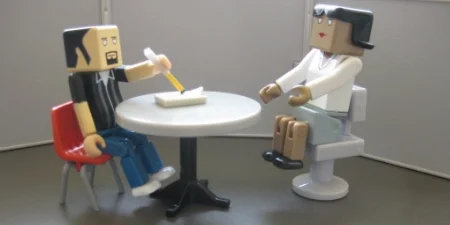
Conduct high-priority product research
To address one of the most critical problem areas for customers using our software platform, I decided to roll up my sleeves and conduct the fieldwork myself.
The Product Decision: Enlist the help of our User Research expert to coordinate formal interviews with a suitable group of administrators and end users from our active customer base.
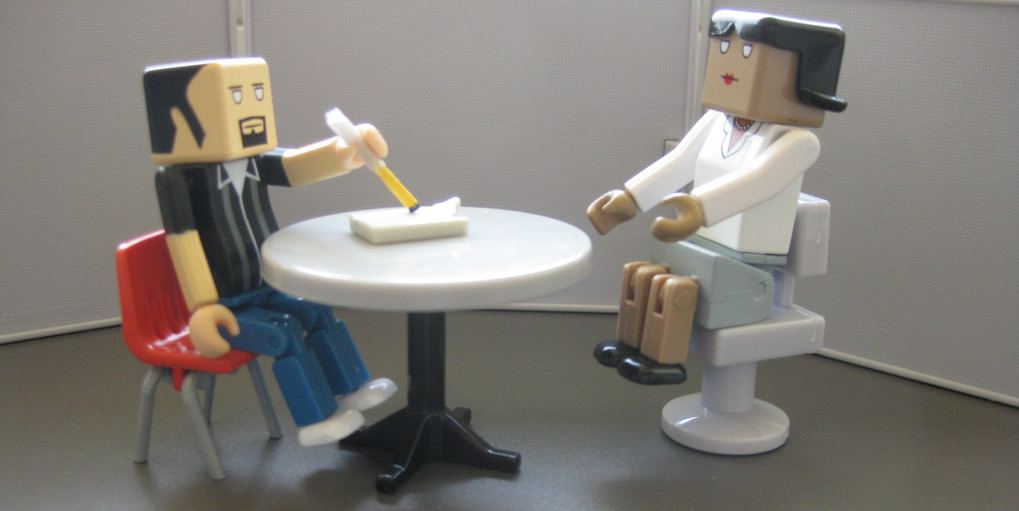
Flickr image source: http://tinyurl.com/pmvvurb
To address one of the most critical problem areas for customers using our software platform, I decided to roll up my sleeves and conduct the fieldwork myself.
For many months, we had been recording feedback from our customers, some direct, some indirect around one particular area of the product. Everyone agreed that we had delivered really powerful features - the common challenge was in the setup and configuration. We had made it too complex to use this valuable piece of the product!
I couldn’t agree more. I knew how hard it was, even for more technical users to configure the tools. I have a deep programming background but even I would struggle trying to ramp up on proprietary schemas with cryptic configuration syntax and poor documentation.
We had been attempting to compensate and even head off frustrated customers by offering to have our own Professional Services team help get customers up and running. But that only served to delay the inevitable as the complaints would then change to “even if you build it for me the first time, I’m not confident I can take it over and maintain it!"
What drove this decision
I had been anticipating a suitable window of time where we could focus on revisiting and rethinking these problems. The teams had been making good progress on some of the pre-requisite components that would be leveraged to rebuild this key feature of our platform. It was time to initiate a round of interviews with customers about how they use the current product, what (if anything) they liked about it and what (again, if anything) they could point to that causes problems for them or their end users.
I wanted to take full advantage of this opportunity to get out of the building, to speak directly to users and reinforce this important research activity with the members of my Product team. Mostly though, I wanted to improve our product and make our customers happy.
The decision: Enlist the help of our User Research expert to coordinate formal interviews with a suitable group of administrators and end users from our active customer base.
I am fortunate to have a talented resource on our team who has raised the bar around user research for our entire company. She continues to guide us all on the finer points of interviewing users early on around product discovery and later on for product usefulness and usability. With her by my side, I felt very confident that we would get to the crux of the problems and ultimately, be able to prioritize the work to come.
While I was eager to get started and optimistic about what we would learn, I heeded my colleague’s advice and adhered to the plan we made to ensure a favorable outcome.
Plan of attack
It was so tempting to just start writing requirements. But I've been wrong before.
I have used our product internally and I have also demoed it hundreds of times to customers so I felt confident that I knew what was wrong and what would need to be fixed. It was so tempting to just start writing requirements.
But I’ve been wrong before. Let me say that again, I’ve been wrong before. I have felt strongly about how our product should work and went straight to the Engineers with requirements only to find out, after they had spent valuable time implementing the stories that there were no customers lined up to use the new enhancements.
Start with hypotheses and a good prototype
Because I was so familiar with this particular part of our platform, I was able to quickly compose a lengthy list of hypotheses of pain points where I would expect to hear complaints from both heavy and casual users:
- We believe Admins are struggling to initially configure a URL to set up a new instance of [tool] in environments like Salesforce.com.
- We believe end users are frustrated with the number of clicks required to complete the ... process, especially if only one document is necessary.
- We believe Admins are resisting adopting and expanding their use of [tool] because it lacks good error handling, is difficult to test, and has too few options for controlling its behavior for the end user.
- We believe end users struggle with scrolling and otherwise navigating through the different areas of the page, e.g. with long lists of templates or with very long data forms and may find it helpful to track incremental progress as they work through sections of a longer form.
- We believe end users are underwhelmed with the stark layout of the [tool] page, the lack of branding, and the lack of any help text.
- We believe end users struggle with using the [tool] with different browser window sizes, specifically when the buttons move around when the page is resized.
- ...
I then had the UX team mock up a clickable prototype that addressed some of the primary concerns and that would allow us to better engage with our interviewees.
Recruit and track participants
To build a list of participants, I first reviewed the customers who were already part of our formal “labs” program (always be recruiting!). Then, I put the word out to our Sales and Professional Services teams to identify other viable customers with whom we could talk. The resulting list was manageable enough for us to track using a shared spreadsheet that included contact information, interview dates, and miscellaneous notes.
Flickr image source: http://tinyurl.com/nomqgdl
| Contact Names | Organization | Preferred Phone/Email | Participation | Last Contact Date | Future Participation | Primary Internal Contact | Notes |
|---|---|---|---|---|---|---|---|
| Nellie Bluth | The Bluth Company | nbluth@thebluths.com | Asked to be included in Fall research initiatives | 7/12/15 | Also willing to help with... | Maggie Lyes, Acct Mgr | Has been helpful in the past but admits to not being technical |
Conduct and record the interviews
When we had accumulated a sufficient list of suitable users, I crafted and sent out an email invite along these lines:
“Hello Vincenzo, I would like to enlist your help for a product research initiative.
I head up the Product team and am leading an active project to learn more about how customers are using our tools. I am reaching out to you because your group is currently using [tool]. I believe you would be able to provide some great feedback on what is and isn’t working well.
If you are interested in participating, the next steps are easy:
1 - Reply to this email with some available interview times over the next 2-3 weeks.
For example, “Tuesday mornings are better”, “tomorrow”, “Wed/Thurs between 3-5pm Pacific”.
2 - Prepare to walk us through how you or your end users use [tool] today
This is a great opportunity to tell us about your successes with [tool] as well as things that would make it easier for you. The conversation should not take more than 45 minutes.”
Not surprisingly, our more fervent users responded immediately. With the others, it sometimes took a little more effort to secure the interviews. We mostly used virtual web meetings to conduct and record the interviews where the customer did most of the driving while we watched.
Our agenda for the interviews followed this path:
- Show us how you use the product today [50% of the interview time was spent here]
- As an [administrator, end user], what would you say if anything, are your favorite things about [tool]? [10%]
- What, if anything causes you or your users problems when using [tool]? [20%]
- Switching gears, we'd like to show you our ideas for a new design... [20%]
I had an intern transcribe notes from the recordings, putting all the material in a central repository so we could index it properly and share it with the rest of Product and Engineering.
The impact
The customer interviews went smoothly giving me exactly what I had hoped to obtain. There was plenty of validation around our current shortcomings, some surprises about certain attributes that users found valuable, and an abundance of constructive griping. The early prototype seemed to be a hit with users and gave me additional confidence to pursue that path.
I expect to deliver a first round of product improvements in the very next release and will continue to engage these customers to validate our efforts. Look for more reports from theProductPath around customer research, product validation, and feature prioritization here on PM Decisions.
More articles from our blog PM Decisions



Build a quick proof of concept
After realizing that I had failed in my previous attempts to head off a questionable new product idea being advocated by our head of Sales, I decided to fabricate a bare bones working example to advance the conversation.
The Product Decision: Outsource a simple prototype to an overseas development partner to avoid disrupting the in-house Engineering team.
Flickr image source: http://tinyurl.com/o8lbm83
After realizing that I had failed in my previous attempts to head off a questionable new product idea being advocated by our head of Sales, I decided to fabricate a bare bones working example to advance the conversation.
To be honest, I was more than a little intrigued by the new product being proposed, not because I thought it would prevent us from losing deals to our competitors - to my knowledge, we hadn't lost any yet, at least not for this supposed product gap. And it wasn't because the technology was particular fascinating or exclusive - in fact, many of our customers could likely build a lightweight version of this on their own without much trouble.
I'd have to say my curiosity was driven by the opportunity to create something new.
Our company has been building a large software platform for over a decade and it increasingly becomes harder and harder to innovate when you're towing along such a hefty code base.
One of the classic mistakes companies can make is to blindly pursue building a new product just because it is feasible for them to do so.
But I wasn't going to let my own fascinations cloud my judgment. One of the classic mistakes companies make is to blindly pursue building a new product just because it is feasible for them to do so. I know better than that and I didn't want to carelessly lead my team down the wrong product path.
The next step then, was to find a way to better validate the claims coming from our own Sales team but to do so with the minimum amount of effort and investment.
What drove this decision
This is a simple chart I created to help drive more meaningful conversations with our Sales team. I have yet to get them to pin down all of these numbers for a given "missing feature" but in their defense, we don't really collect and track sufficient/suitable data in our sales process to drill down this far. Still, this model does help to frame product investment decisions.
Our Head of Sales was steadfast, still convinced that our product had to have this missing functionality, mostly because our chief competitor was flaunting their own version in front of our prospects. I had tried - and failed - to squash the idea before it gathered any more steam. It was becoming clear to me that I would have to dedicate more cycles to this product proposal even if the end result (i.e. not moving forward) was the outcome.
My chief problem, however, was that our Engineering team was booked solid for the next few sprints and I didn't want to distract them with a side project that was still a long way off from being productized.
I needed a way to make some incremental progress with the new product idea without impacting the team's current development velocity.
The decision: Outsource a simple prototype to an overseas development partner to avoid disrupting the in-house Engineering team.
Giving a new project to an external team can be tricky. My goals were to properly scope the work up front, produce the desired results quickly, and have a clear path forward when the project was complete.
Plan of attack
I was focused on reducing the size of the project to the point where I had what I needed to start validating the product with our end users and prospects. That meant more than just providing good requirements however. I also needed to give the remote team the support it would need to complete the job and deliver the goods.
Define basic requirements and allowable shortcuts
One nice thing about sharing early prototypes such as wireframes or mockups is that your intended audience will often be very forgiving. I have found that when provided with sufficient clarification, users will focus on what's there and not obsess about what's not yet there.
I wanted to make sure that the proof of concept had enough relevant functionality in place to confirm our initial hypotheses. I also wanted to identify places where we could safely skip over steps that would have to be part of the final solution. These include the compulsory but more technically challenging operations like installation and authentication.
I wrote and delivered the requirements to the remote team being careful to emphasize the elements that would have to perform accurately for the end user. I then highlighted the remaining elements that didn't contribute directly to the end user experience where I felt we were safe in taking time-saving shortcuts (i.e.. "just hardcode it for now").
PROVIDE TECHNICAL SUPPORT TO TROUBLESHOOT the remote work
Our remote development team had been working with the company for several years but some new faces were joining this project. To make sure they could ramp up quickly and avoid any first-time stumbling blocks, I recruited a few key internal, technical resources to help launch and support the effort.
As it turns out, the remote team did hit some stumbling blocks in their attempts to use our new API and in resolving those issues, we actually uncovered - and fixed - some problems with our own API deployment process!
Secure the POC artifacts for the next round
When the proof of concept was finished, I had the remote team demo it to a few folks from our Engineering and Product teams. We were all pleased to see the results and I felt confident that we now had a suitable working model to go back with our Sales team and begin engaging customers.
The impact
I had already expressed my doubts to the Sales team about the actual effects of adding a component like this to our product mix - specifically, that it would not significantly advance competitive deals that are in jeopardy. With a working proof of concept in our hands now, it would be easier for us to determine exactly what (would-be) customers were looking for and whether this would affect their buying decision.
I would still have much more work to do in building a truly shippable product if I was wrong and customers latched onto this proof of concept. But I am convinced that I made a good tactical decision at this point and that we would realize a good return on this particular product investment decision.
Look for more reports from theProductPath around product validation, feature prioritization, and managing stakeholders here on PM Decisions.
More articles from our blog PM Decisions

Recalibrate product priorities for the next 6 months
As we approached the half-year mark, I recognized that I needed to regroup with my internal stakeholders to make adjustments around what we would be delivering for the second half of the year.
The Product Decision: Organize and facilitate a product strategy summit with all the department leaders to revisit and rebalance priorities.
Flickr image source: http://tinyurl.com/pb94a5u
As we approached the half-year mark, I recognized that I needed to regroup with my internal stakeholders to make adjustments around what we would be delivering for the second half of the year.
You could argue that the half-way point through a calendar year is a somewhat arbitrary juncture, but nevertheless it provided me with a good checkpoint opportunity. Since the beginning of the year, my team had planned, built, tested and delivered product updates through several releases. Before we commenced with the next cycle, I wanted to revisit our priorities and review any significant changes in the business that would require some course correction in the product roadmap.
What drove this decision
I was confident that the Product team had been addressing the full range of demands and that we would continue to balance stakeholders' priorities as we were all committed to satisfying our end customers' needs.
We had already begun to carve out big plans for the next 6-9 months and some of them would require significant investment. I knew we were aligned with individual departments but over time, the various department heads had lost sight of what was most urgent for their peers. It would be more difficult for me to deliver and promote an updated product roadmap without some preliminary group consensus at the topmost level.
The decision: Organize and facilitate a product strategy summit with all the department leaders to revisit and rebalance priorities.
I will be the first to admit that the word "summit" sounds a bit lofty (pun intended) but I assure you this was not some trumped up, off site boondoggle - I'm saving that for my big end of year 1st Annual Product Strategy Retreat.
My goal was simply to get all the department VPs and some key Directors in the same room and run through a formal, Product-focused agenda. I wanted to use the time to review the roadmap choices we had made over the last 6 months (some good, some bad) and continue to push the company to pursue sound product investment decisions.
Balancing 3 related concerns: curb appeal, interior living space, and structural foundation
In the many discussions I had been having with the different departments leading up to this summit, it became increasingly clear that there was a lack of mutual appreciation, if not basic understanding of what was driving the other departments' priorities. A number of the stakeholders were out of touch.
I wanted to share this insight with the invitees but in a way that didn't offend or alienate a particular group. In the summit invite, I offered the following apartment building metaphor to help explain the different, but complementary perspectives of each group:
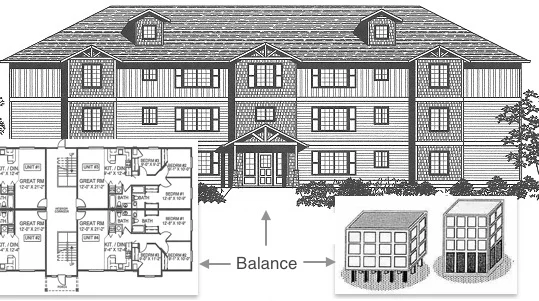
Image sources: http://tinyurl.com/nbzkcoz, http://tinyurl.com/pno7n9f
- Sales wants the building to have massive curb appeal, to look good from the outside so as to increase the chances of attracting new customers.
- Customer Success wants all our new tenants to have a smooth move-in experience and to enjoy living in their new home for many years.
- Operations wants to make sure the building itself can safely support all the tenants and their various housing needs.
And of course everyone in the organization should be focused on increasing customer satisfaction as it will lead to renewals and referrals!
Plan of attack
Setting proper expectations: everybody wins! everyone loses!
I started the meeting by setting expectations for the group - which largely meant telling them that no one was going to get everything they wanted. The summit was an exercise rooted in compromise. I told them that it was equally important for them to defend their own priorities as it was to become more aware of what the other departments were struggling with.
The bulk of our time in the summit was spent prioritizing a lengthy list of wish list items. To kick things off, though, I offered an assessment of the past six months to remind everyone why we built the things we did and to get some feedback.
Review the roadmap themes for the year
I first presented the product strategy I had introduced at the beginning of the year that outlined how I would be making decisions for the next 12 months. Specifically, I highlighted the roadmap themes that were established back then and verified with the group that we were still confident in those decision-making guidelines.
Review 1st six months
Building on the initial validation from the group, I proceeded to show how the recent product decisions we had made were in line with the roadmap themes. This brief, high level review of the advancements we had made in our product portfolio over the past 6 months provided an ideal opportunity to explore queries such as:
- How accurate was the original plan and how close did we come to hitting our targets/metrics?
- Are the major initiatives still on track or have there been new insights that require us to adjust our course?
- What have we learned about estimating work, about dependencies, about our ability to accurately respond to customer demand?
I was certainly pleased to hear the group confirm that the first half of the year was largely productive and that we had been made solid product investment decisions.
First pass at prioritization
From the Trello board I created to capture individual wish lists for the different departments, I pulled the top 30-40 cards to start the prioritization exercise. The first step was to bucket the items into either one of only two lists: High Priority or Low Priority.
This first pass proved to be relatively easy for the group. I was pleased to see the Low Priority list ultimately accumulate many more cards which meant the final pass would be that much easier.
Overall, it was a constructive discussion. None of the participants were particularly unreasonable and did not fight excessively for their own items. I did occasionally use the following prompt when we seemed to be getting stuck: "Can we get through the second half of the year without spending any time on this item?" That was often the only nudging that was required to properly bucket the topic.
Crash course on product constraints
I had prepared a break in the summit schedule in case we needed a cooling off period - and intentionally scheduled the catered lunch to arrive during the break. It turned out there hadn't been that much contention so I instead used the break to revisit some of our constraints and to remind the group about why the next half of the exercise was going to be frustrating for all. Specifically, I talked briefly about the following topics:
- Our true development capacity - what we should really expect from the current size and skill level of our Engineering teams. Read more about setting expectations around Engineering capacity here.
- Software's total cost of ownership - how each line of code we add requires more of our company's resources from Product, Engineering and QA all the way through documentation, support, and training.
- Opportunity costs - each time we agree to start building something new, we must recognize how that will limit our ability to respond to the next "must have" requirement (yeah Sales, I'm talking to you!)
I can't be sure if all the messages landed on point with the entire group but it was my meeting and I was going to take advantage of this ideal product soapbox opportunity.
Final pass at prioritization
In the home stretch, the group now turned its attention to reviewing the much shorter High Priority list (14 items, down from 40). One by one, I went around the table to get individual input. I guided the group by having each of them select 1 primary item and 1-2 backup items.
When we had finished the final pass, we had arrived at a prioritization list that had mutual support from all departments. And I had a clear indication of how I would be adjusting the Product Roadmap for the second half of the year.
The impact
Not only did we finish the full exercise (on time no less) with a shared prioritization list but I was told afterwards by the group members that it was one of the more amicable and productive meetings around product direction in which they had participated in recent memory.
I made it clear to the group that the summit was not designed to immediately produce a new or updated roadmap. It would take me more time to work through the items on the High Priority list and factor everything into the Product Roadmap for the second half of the year. Still, I would like to believe the outcome of the summit extended beyond achieving consensus around particular product priorities. I think it represented a milestone for advancing inter-departmental agreement. Maybe next time, I'll refer to it as a Product Peace Accord.
Look for more reports from theProductPath around feature prioritization, product strategy, and managing stakeholders here on PM Decisions.
More articles from our blog PM Decisions

Cut down the scope of the initial product by 20%
After receiving push back from users in the first rounds of testing, this startup decided to eliminate a significant portion of its product offering.
The Product Decision: Drop an entire section of the user workflow.

Flickr image source: http://tinyurl.com/pg4zl82
After receiving push back from users in the first rounds of testing, this startup decided to eliminate a significant portion of its product offering.
For the past year, I have been observing the early stages of new business, started here in Chicago. The technical co-founder, a close friend, has also been serving as the Head of Product, not uncommon for small companies. I have been keenly interested to watch how this team would bring their vision to market and all the twists and turns that path would take.
One interesting development occurred after they put their initial version of the product in front of their target users. The feedback was immediate and in my opinion, quite sobering. The team would seem to have gone too far in one direction and was now facing a critical decision to scale back the initial scope of its product.
What drove this decision
“This is too hard. I don’t want to create more work for myself or my client.”
The originally envisioned product was intended to utilize a 3-step process. Users would complete a high-level questionnaire followed by a more detailed assessment to produce a curated product catalog where they could then make purchases in a familiar e-commerce scenario.
After developing a reasonable first pass at each of these components, the team put the product in front of a sample set of target users. The feedback was prompt and to the point: this is too hard.
The team had to make a change.
The decision: Drop an entire section of the user workflow
The (initial) users had spoken. The workflow had to change. It had to be simpler to complete. This startup team needed to step back and review the customer flow.
Plan of attack
The team ultimately decided to refactor the 3 step process and eliminate 1 of the questionnaires. After that, it would be time to test again:
- How would the new process change the results?
- Was there still a clear path to the purchase?
- What would the users find challenging about the new workflow?
Rethink the customer flow
The refactoring exercise began by decomposing the workflow process into finer grained steps, then exploring alternative paths for leading the user to the product registry at the end. The team focused on keeping what was needed most and trimming away the rest.
Redeploy the process with 1 fewer components
Having established the revised flow, the team proceeded to put the pieces back together to create a more streamlined activity for the users. The objective: a simpler process with fewer steps that produced the desired outcome.

Image source: https://www.flickr.com/photos/mmetcalfe/3874486791
Retest with users
Armed with an updated and improved product, the team scheduled the next round of user testing to validate their work.
The impact
Ultimately the team verified that their users could successfully complete the process without the extra steps. It takes courage to put an unfinished product in front of your customers and even more guts to go back to the drawing board when you get frank criticism.
Removing working code from a brand new product can be hard, especially if you look at the work required to build that code as having been wasteful. But I would argue that learning early leads to less waste. I applaud the startup team and encourage all product-minded people to follow their lead.
Look for more reports from theProductPath around product validation, feature prioritization and voice of the customer here on PM Decisions.
More articles from our blog PM Decisions


Find a good stopping point for a postponed feature
After the principal customer backed off a requested new feature, I decided to quickly wrap up our discovery work.
The Product Decision: Suspend ongoing product discovery and shore up the current state of requirements.
Image source: http://tinyurl.com/lckcjk6
After the principal customer backed off a requested new feature, I decided to quickly wrap up our discovery work.
Large feature requests require more time to plan and necessitate more resources. Collecting and sorting through customer requirements may stretch out over weeks or even months. And once these initiatives get going, they can gather momentum making it more difficult to shelve everything when the team's priorities change.
What drove this decision
One of our largest customer had asked us to help them with a problem that was tied to how they were using our software. It was a new problem for us but one that we felt would likely benefit other customers.
We had acquired a solid list of initial requirements but we knew better than to rely on only 1 source. So the Product team started researching the similar needs of other customers to begin the work of scoping out a new feature.
Not long into this effort, the original customer reprioritized some of its own, internal initiatives. The urgency around this problem diminished and the feature request dropped much further down the list.
The decision: Suspend ongoing product discovery and shore up the current state of requirements.
I wanted to make sure that if and when the feature came back around, we could resume quickly and regain some of our initial velocity. We had made good headway and I needed to preserve as much of that as I could, especially if a different team would be picking up the feature next time.
Plan of attack
I was confident that the next team to work on the feature should not have to start from scratch.
Requirements change, technology changes, and priorities certainly change. And I was sure that if we restarted this effort even 2-3 months down the road, we would have to revisit our assumptions. Still, I felt confident that we had been on the right track and wanted to preserve our progress as best I could.
Review the current hypotheses
I started by capturing the hypotheses I had developed around the proposed feature. I made sure to describe the thinking that went into the current hypotheses, to highlight assumptions I was in the middle of testing, and to list some of the ideas I had already ruled out.
Obviously some of these assumptions would - and should - be revisited but the next group would certainly benefit from the validation work I had done for the parts around which I had more confidence. For example, rather than build an entirely new scheduling tool to orchestrate and run a proposed background process, I had intended to leverage one we already had, even if it didn't completely accommodate all of the new requirements.
Create a list of next steps
I was forced to pause in the middle of the feature discovery but I had been working through a rough plan that would have resulted in a path forward. I felt it was important to document that plan, showing where I had left off and where the next team might pick it up and continue. I tried to anticipate and answer questions they might have such as:
- How far into this effort did the previous team get?
- How would they have scoped the work, knowing what they knew at the time?
- What were the dependencies if any that would guide the order of the proposed work?
- Did they identify technology limitations that would have dictated what was feasible at the time?
Preserve the notes in a convenient, accessible place
Flickr image source: http://tinyurl.com/lo8esfw
An obvious measure perhaps but I did not want to make it hard for the next team to find my notes. At the moment, our team uses Confluence for capturing early product discovery work. It is hard to believe that we would have moved on to another tool but anything is possible. So I made sure to create prominent links to the repository from Trello, the tool I use to corral Executive input; from Slack, the new tool of choice for our Dev Ops and Customer Support teams; and in the primary email thread we had been using to communicate with the original customer.
The impact
Part of me feels that there was some wasted effort both in the original work and the steps to wrap it up for a future phase. But that feeling is not as strong as the one that is happy not to have invested even more time building a feature that may have been excessive or unneeded.
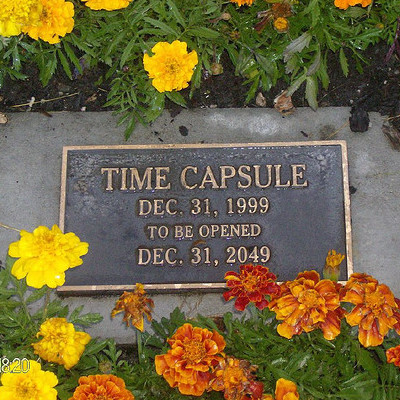
With a pay-it-forward mindset, I tried to think about helping the next PM to inherit this feature as I went through these steps. I know I would appreciate someone doing the same for me. And if it is me that opens the product feature time capsule down the road, I promise to be kind to my former self when writing up that experience.
Look for more reports from theProductPath around product teams, feature prioritization, and product investments here on PM Decisions.
More articles from our blog PM Decisions
Over the past weeks, I had lost touch with my colleagues in Marketing, so I decided to take advantage of some mutual schedule alignment and catch up with our Product Marketing Manager.
The Product Decision: Regroup with my counterpart in Product Marketing to get our collective and connected plans in order.